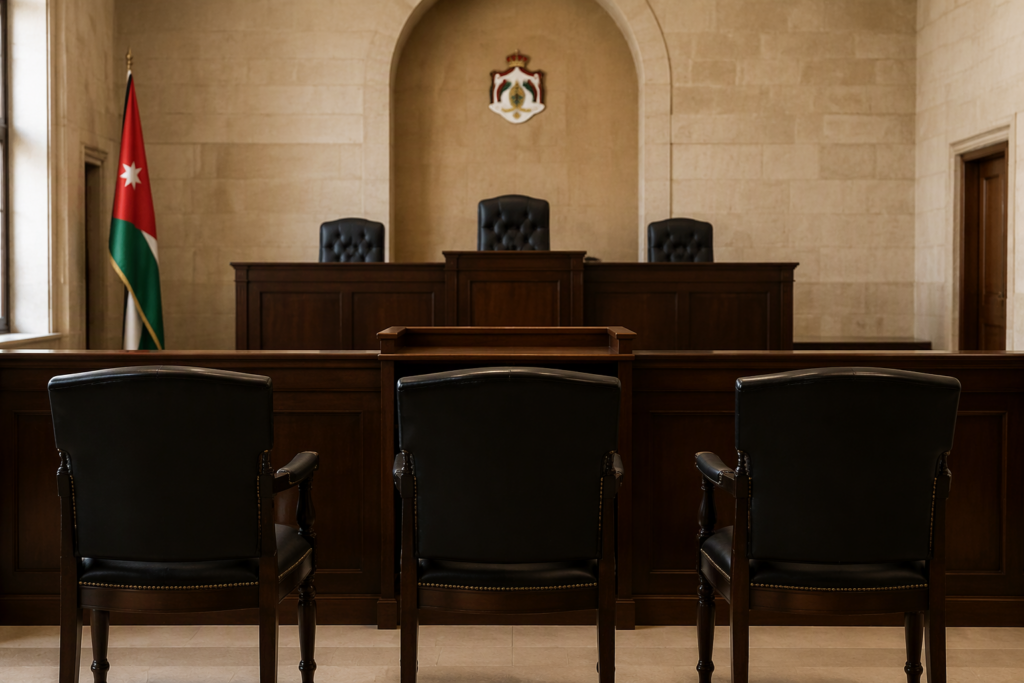
Mourners gathered for a funeral inside a village church in southern Jordan were met with rapid gunfire that left nine people dead and dozens wounded across the sanctuary floor. Now, a Jordanian court has sentenced three men to death by hanging for their roles in the deadly Jordan church shooting.
The attack took place on 23 October at St George’s church in Hmoud, a village in the southern governorate of Karak. Jordan’s armed forces announced on Sunday that the court convicted the men of carrying out terrorist acts, possessing illegal weapons, promoting the ideology of a terrorist group, and conspiracy.
Also read: Ukraine NATO Membership Floated as Drone Strike Kills Three
The ruling delivers swift capital punishment in a kingdom determined to project security and snuff out sectarian violence. Karak governorate houses a sizeable Christian minority within Muslim-majority Jordan, and the assault struck at the heart of that delicate communal coexistence.
How the Jordan church shooting unfolded in Hmoud
The violence erupted without warning in broad daylight during a Christian funeral at the Greek Orthodox church. Security cameras mounted outside recorded three gunmen approaching St George’s church on foot while carrying automatic weapons before opening fire directly at people entering and standing outside the building.
A second video circulating from the scene showed bodies and severely injured mourners lying across the floor in the chaotic aftermath. In total, nine people died and 34 were wounded, making it one of the deadliest sectarian attacks on Jordanian soil in recent years.
Authorities have not established why the gunmen chose that specific parish. The three convicted men are two Jordanian brothers and their brother-in-law, though officials have kept their names private throughout the trial.
A three-day standoff in an abandoned house
Immediately after the shooting, the three attackers fled the village into the surrounding countryside. Their escape triggered a massive security operation across Karak governorate, located roughly 120 kilometres south of the capital, Amman.
Three days later, counter-terrorism teams tracked the trio to an abandoned house in the district. When officers surrounded the building and demanded their surrender, the suspects opened fire on the perimeter.
Security forces returned fire during the brief shootout, wounding all three suspects before taking them into custody. The Public Security Directorate confirmed that no law enforcement officers sustained injuries in the raid.
King Abdullah II publicly commended the tactical teams for pursuing the suspects without pause. In a statement posted to X following the raid, the monarch took a defiant stance against attempts to fracture the country along religious lines:
“Those who delude themselves into thinking that they can divide Jordanians with their bullets have no chance in the face of our unity.”
Cross-border retaliation and civilian casualties in Syria
The reverberations of the Jordan church shooting quickly crossed international borders. Just one week after the massacre, Jordanian fighter jets launched air raids across the northern frontier into southern Syria.
Military officials in Amman said the strikes targeted compounds belonging to extremist groups linked to the church assault. Jordan claimed its pilots killed and wounded several fighters during the operation.
Yet the strikes triggered immediate friction with Damascus. Syrian health officials in southern Daraa province reported that five civilians died in the bombing, including women, children, and an elderly man. Syrian state authorities disputed Jordan’s claim of advance coordination, stating they received no warning before the strikes hit the village.
The return of the gallows in the kingdom
Jordan carries out all death sentences by hanging, but the kingdom’s use of the punishment has fluctuated over the last two decades. Authorities observed an unofficial freeze on executions between 2006 and 2014, followed by another pause that lasted from 2017 until June this year.
The resumption of hangings earlier this year set the stage for swift verdicts in high-profile national security trials. With formal sentencing now handed down by the court, the legal file moves toward judicial review before reaching the monarch’s desk, where King Abdullah must sign final royal decrees before the hangings can take place.
Source: BBC


