
The Evolving Role of US Overseas Bases
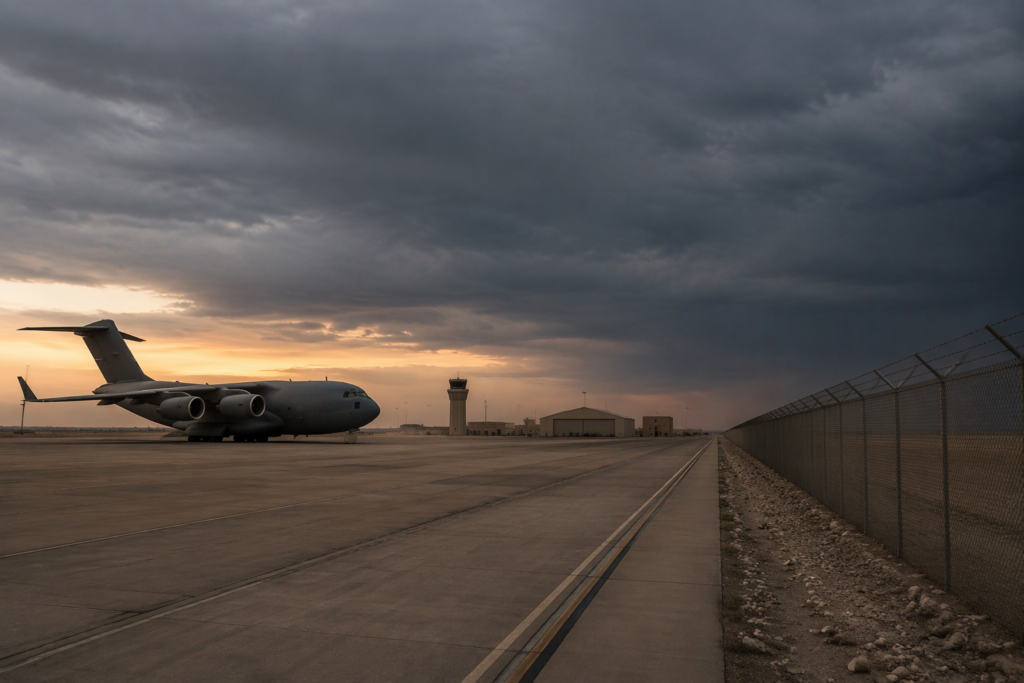
For decades, US overseas bases provided Washington with the logistical footprint needed to project power and wage faraway wars. From military facilities in the United Kingdom to sprawling forward installations across the Persian Gulf, these hubs formed the backbone of global force posture.
However, shifting geopolitical realities and changing battlefield technologies are prompting analysts to question whether these long-standing installations remain vital assets or are gradually turning into strategic vulnerabilities.
Also read: Iran Warns of Expanded Retaliation as Israel Readies Potential Attack
How Iran Changed the Strategic Calculation
The debate has intensified across the Middle East, where confrontation with Iran has fundamentally altered regional security dynamics. Over recent years, advancements in missile precision, unmanned aerial systems, and asymmetric warfare have expanded the reach and capability of regional adversaries.
Historically, forward-deployed bases served as safe launchpads for deterrence and rapid intervention. Today, their fixed geographical coordinates expose military personnel, command centers, and valuable assets to potential direct strikes, forcing commanders to dedicate substantial resources simply to defense.
Geopolitical Strains Across Host Nations
The implications of this vulnerability extend along the entire logistical corridor, from the Gulf to European partners such as the United Kingdom. Installations in allied territory frequently provide essential communications, intelligence, and staging capabilities for operations in distant theaters.
As potential conflicts carry higher risks of retaliation, host nations face mounting political and security dilemmas. Permitting operations from their soil risks drawing them into broader regional escalations, straining traditional diplomatic partnerships and alliances.
Reassessing the Global Military Footprint
The changing environment presents defense planners with a difficult tradeoff. While forward presence still offers rapid response capabilities, concentrated military assets in contested areas present clear targets for regional powers equipped with modern strike capabilities.
As threats evolve, the strategic consensus that once governed foreign deployments is being tested. Planners must now balance the strategic advantages of projecting force abroad against the mounting operational and political costs of maintaining vulnerable installations.
Source: Al Jazeera