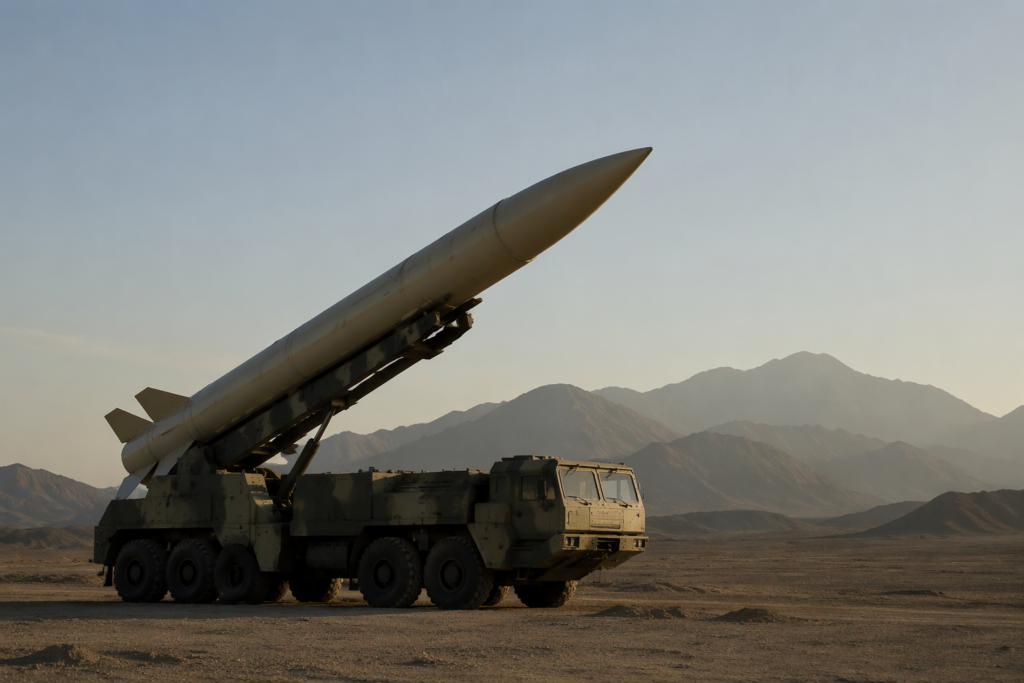

Iran has moved to lift its long-standing, self-imposed 2,000-kilometer range restriction on its missile arsenal, signaling a major strategic shift in its defense doctrine. The decision surrounding Iran ballistic missiles marks a notable departure from years of official policy that capped weapon ranges within the immediate region.
Understanding the 2,000km Cap on Iran Ballistic Missiles
For years, Iranian military officials and leadership maintained that their missile development was strictly defensive and deliberately capped at a maximum operational range of 2,000 kilometers (approximately 1,240 miles). That limitation was sufficient to reach regional targets across the Middle East, including regional adversaries and foreign military installations stationed in neighboring territories.
Also read: Saudi Arabia Downs Missiles Fired at Riyadh Following Pipeline Strike
By lifting this boundary, Tehran removes a key political and military threshold that had previously framed its defense posture. The removal of the restriction opens the door for developers and aerospace units to test and field longer-range systems capable of reaching well beyond the immediate theater.
Strategic Impact on Iran Ballistic Missiles Program
The technical architecture of Iran’s aerospace sector has advanced significantly over the past decade. Analysts have long observed that existing solid-fuel and liquid-fuel propulsion technologies, as well as space-launch vehicle programs, possess the underlying capability to exceed the former 2,000km threshold.
Shifting Regional and Global Deterrence
Expanding the operational reach of these systems fundamentally alters security calculations. Beyond reinforcing deterrence against regional threats, longer-range capabilities could theoretically bring targets in southeastern Europe and deeper parts of Eurasia within reach of Iranian launch sites.
Military planners view missile range extensions not merely as an offensive expansion, but as a deliberate signaling mechanism intended to counter foreign defense pacts, economic sanctions, and external military pressures.
Implications for Diplomacy and Security
The policy change is expected to heighten scrutiny from Western governments and regional powers, who have routinely expressed alarm over missile proliferation and advanced weapons testing. With previous diplomatic frameworks constrained, the decision presents a fresh challenge for international monitoring efforts and regional security dialogues.
As defense units evaluate their next operational steps, the formal end of the range cap redefines the boundaries of Middle Eastern military capability and introduces a new variable into global nonproliferation discussions.
Source: Al Jazeera