
Why Elections in Israel Rarely Produce Meaningful Political Change
Despite repeated cycles of high-stakes voting and fierce campaign rhetoric, political analysts and observers increasingly argue that elections in Israel fail to produce genuine, transformative change. While voters frequently head to the ballot box, the outcomes routinely yield familiar coalitions, entrenched policies, and persistent institutional gridlock.
The country held five general elections between 2019 and 2022 alone. Yet, across these cycles, core domestic, regional, and security trajectories remained remarkably consistent. An examination of the nation’s political architecture, demographic evolution, and security consensus reveals why national ballots rarely alter the fundamental direction of state policy.
Also read: Why Who Israel Elects Matters Across the Middle East and the World
Coalition Politics and the Mechanics of Stalemate
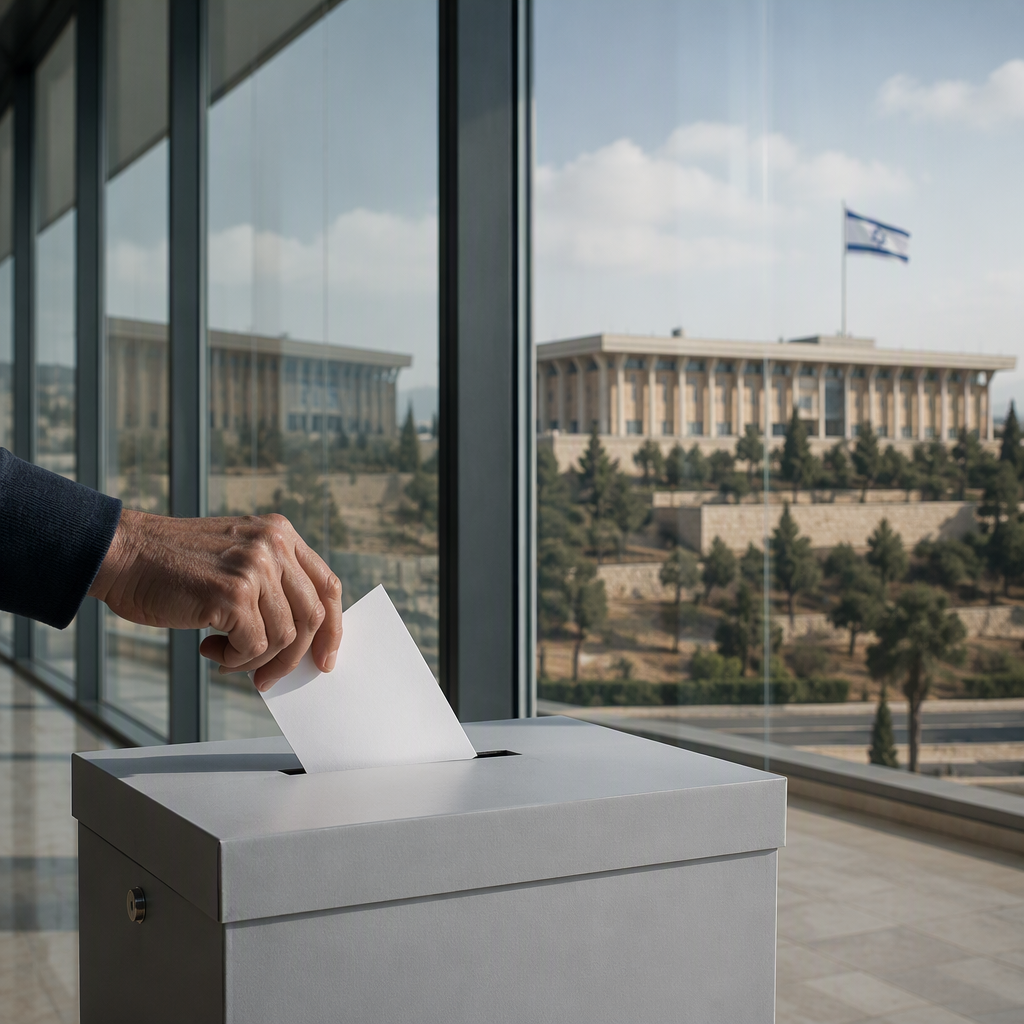
Israel operates under a pure proportional representation system. The entire country forms a single electoral district, and parties must cross an electoral threshold of 3.25 percent to enter the 120-seat Knesset. Because no single party has ever won an outright 61-seat majority in Israeli history, governance requires coalition building.
This structural reality grants disproportionate leverage to smaller factional parties, particularly religious and ultranationalist groups. Major parties must continually concede critical ministerial posts, fiscal resources, and policy vetoes to secure a parliamentary majority. As a consequence, newly elected governments find themselves constrained by the demands of minority partners, sharply limiting their ability to enact substantial legislative or institutional reforms.
Even when governing coalitions shift between right-wing alliances and broad unity formations, the imperative of political survival forces leaders to preserve the status quo rather than pursue divisive policy overhauls.
Ideological Consensus Across the Political Mainstream
While public debates between rival camps appear polarized, political scientists emphasize that a broad consensus exists across the mainstream Israeli spectrum on fundamental national security and foreign policy questions.
Decades of failed peace initiatives, combined with persistent security threats, have largely eliminated the traditional left-right divide on the Israeli-Palestinian conflict. Mainstream centrist, center-right, and right-wing parties agree on core security doctrines, ongoing military control in the West Bank, and skepticism toward a two-state solution.
Consequently, transitions of power from one prime minister to another rarely alter strategic defense doctrines or regional diplomacy. Changes at the top affect tone, diplomatic style, and personal appointments, but the underlying strategic posture remains essentially unchanged.
Demographic Trends Reshape the Electoral Landscape
Demographics further constrain the possibility of electoral change. Israel’s electorate has steadily shifted to the right over several decades, driven by population growth within conservative, religious, and traditional communities.
The high birth rates among the Haredi (ultra-Orthodox) population and religious-nationalist communities ensure that right-leaning blocs maintain an enduring baseline of support. Meanwhile, the secular center and left have struggled to expand their voter bases beyond urban centers. This demographic reality creates a high electoral floor for conservative coalitions, reducing the likelihood of any structural shift toward progressive governance.
The Limits of Elections in Israel to Resolve Core Conflicts
The limits of elections in Israel have become particularly visible in recent years as national politics shifted from ideological debates to personal and constitutional disputes. For much of the past decade, campaigns centered around the leadership of Prime Minister Benjamin Netanyahu and debates over judicial authority, rather than alternative socioeconomic or diplomatic platforms.
This focus on personalization has reinforced cynicism among voters. Major socioeconomic challenges—including severe housing affordability crises, rising costs of living, and deep gaps in civic infrastructure—receive significant campaign attention but minimal policy remediation once governments form. Bureaucratic inertia and the power of entrenched interest groups frequently outlast any cabinet’s tenure.
What Happens Next
Looking ahead, future general elections are expected to remain fierce contests over personalities, judicial governance, and coalition formulas. However, systemic constraints suggest that voting alone will not resolve the country’s deepest structural dilemmas.
Substantive change would likely require comprehensive institutional reform, such as raising the electoral threshold, transitioning toward constituency-based representation, or adopting a written constitution. Without such structural overhauls, upcoming ballots will likely continue to rearrange familiar parliamentary pieces without altering the core trajectory of the state.
Conclusion
While voting remains a vibrant civic exercise, the evidence suggests that elections in Israel are poorly suited to delivering structural transformation. Entangled coalition arithmetic, persistent demographic trends, and a deeply rooted security consensus mean that new governments inevitably operate within narrow, pre-existing boundaries, leaving core policies largely untouched regardless of who holds office.