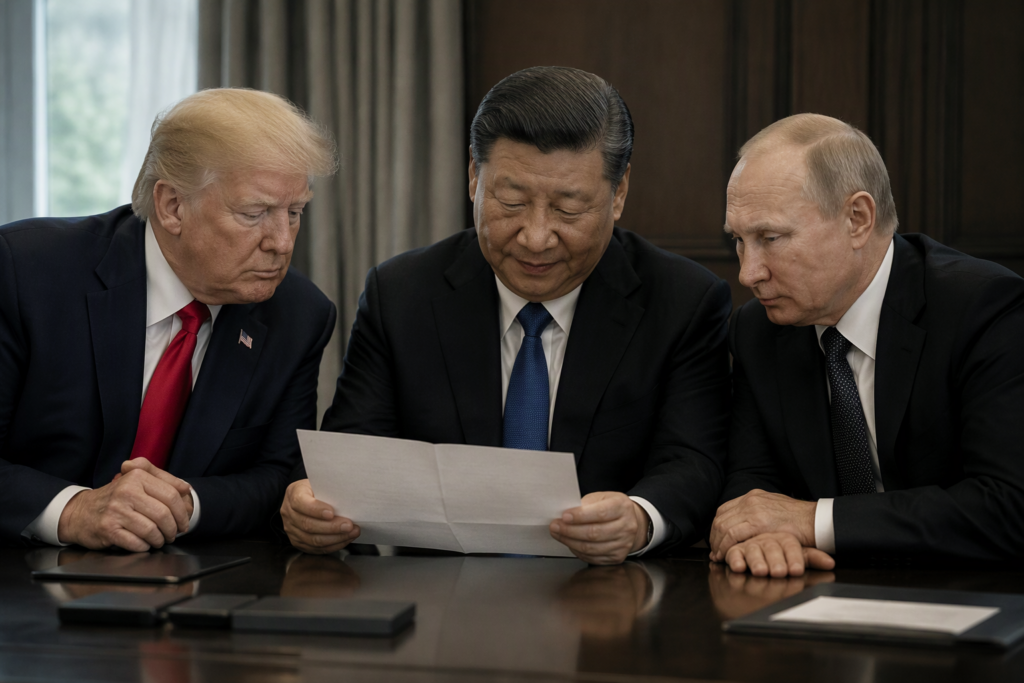
President Donald Trump has returned home to the United States after a direct summit with Chinese leader Xi Jinping and Russian President Vladimir Putin, where the three leaders unveiled a four-point peace declaration.
The high-stakes Trump Xi Putin summit arrived against the backdrop of escalating tensions across multiple continents. Observers quickly turned their focus to how the framework addresses active fighting in Europe and escalating flashpoints across the Middle East.
Also read: Trump Xi Putin Talks: President to Detail Summit at Briefing
Inside the four-point peace declaration
Appearing on Fox & Friends First, retired Navy SEAL Mike Sarraille broke down the core elements of the leaders’ discussions. The talks produced a four-point peace declaration designed to establish clear lines of communication between Washington, Beijing and Moscow.
The document comes at a moment when global diplomacy faces extreme strain. While official details continue to emerge from the meetings, the agreement seeks to outline mutual expectations between the world’s most heavily armed powers.
Russian security guarantees and ending the war
A central focus of the post-summit assessment is whether Moscow is genuinely prepared to halt its military campaign. Sarraille examined signs regarding Vladimir Putin’s readiness to end the war, pointing to diplomatic discussions surrounding long-term terms.
The discussion also highlighted Jared Kushner and his recent public remarks addressing Russian security guarantees. Kushner suggested that durable peace in Eastern Europe may require addressing Moscow’s strategic concerns about border stability and international alliances.
The strategy on potential Iran strikes
Beyond Eastern Europe, the talks directly touched on Middle Eastern security and rising friction with Tehran. Sarraille analyzed Trump’s specific posture regarding potential Iran strikes, an issue that continues to loom over regional stability.
Washington faces difficult decisions regarding deterrence, especially as regional proxy battles threaten commercial shipping lanes and American installations. If you follow global defense strategy, the administration’s stance suggests a preference for deterrence paired with a willingness to project force if red lines are breached.
All eyes now turn to how diplomatic envoys translate the summit agreement into binding enforcement measures in the coming weeks.
Source: Fox News