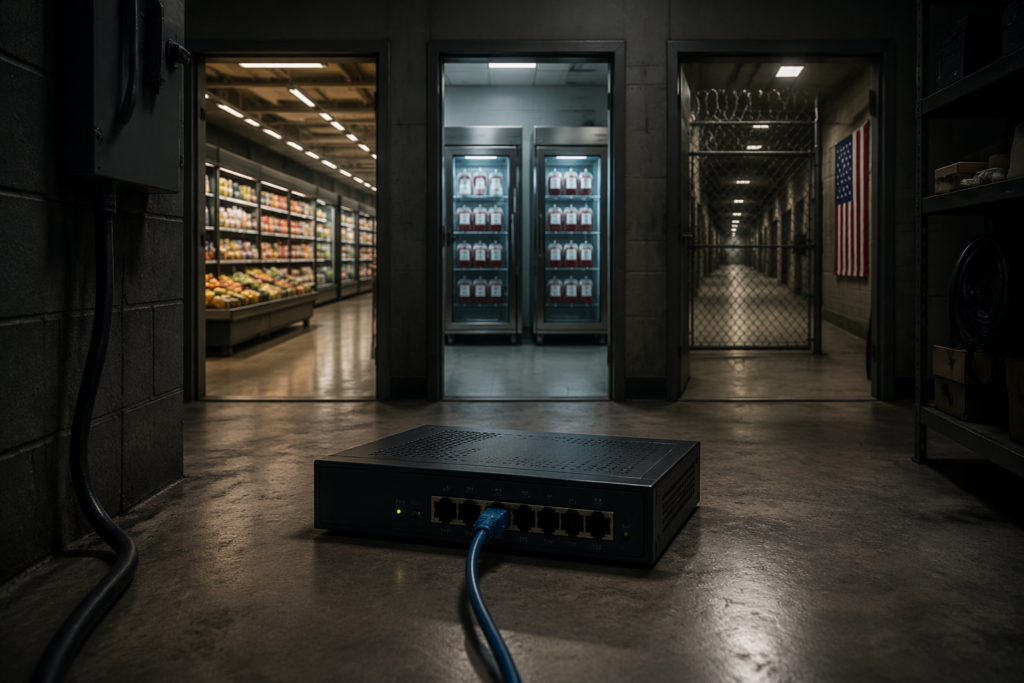

Cybersecurity concerns are mounting after reports revealed that hackers target surprising weak spot vulnerabilities across diverse entities, ranging from grocery stores and blood banks to a U.S. military base.
How Hackers Target Surprising Weak Spot Across Diverse Sectors
The convergence of commercial operations and sensitive defense facilities falling prey to cyber threats highlights an expanding digital attack surface. While military installations and vital medical centers operate in vastly different environments than community supermarkets, they often rely on similar interconnected software platforms, building automation systems, and third-party vendor networks.
Also read: Fake Party Invite Scam: Can You Really Trust a Friend’s Reply Online?
Cyber adversaries increasingly scan for peripheral systems rather than attempting direct breaches of heavily fortified core networks. When organizations overlook routine maintenance or fail to patch auxiliary systems, malicious actors gain an unexpected avenue to penetrate deeper internal architectures.
Risks to Essential Supply Chains and Health Infrastructure
Grocery chains and blood donation networks perform essential daily functions, making any operational disruption an immediate concern. Retail food distributors depend heavily on automated inventory tracking, cold-storage monitors, and point-of-sale systems. An intrusion into these supporting networks can interrupt supply routes, create localized shortages, or compromise sensitive payment information.
The threat is even more acute for blood banks, where refrigerated storage and precise tracking ensure the safety and viability of medical resources. An unauthorized intrusion into administrative or logistical systems can stall critical donations and complicate distribution to regional trauma centers and hospitals.
National Security Implications for Military Bases
The targeting of a U.S. military base underscores the persistent threat posed by sophisticated cyber actors seeking entry into defense networks. While tactical defense operations use isolated and hardened infrastructure, base support services—such as commercial supply delivery, contractor portals, and energy management—often connect to external networks.
Federal cybersecurity agencies have frequently warned that foreign adversaries and opportunistic cybercriminals actively probe non-combat, administrative infrastructure to establish footholds. Even limited access to auxiliary systems can yield valuable intelligence or serve as a launchpad for lateral network movement.
Strengthening Infrastructure Against Unexpected Cyber Vectors
Cybersecurity experts advise organizations across both the public and private sectors to conduct immediate audits of non-traditional entry points. Recommended defensive measures include implementing strict network segmentation, requiring robust multi-factor authentication, and continuously monitoring third-party software integrations.
As threats to essential services grow more complex, maintaining vigilant cyber hygiene across all operational levels remains crucial to protecting critical infrastructure and national security.
Source: Fox News