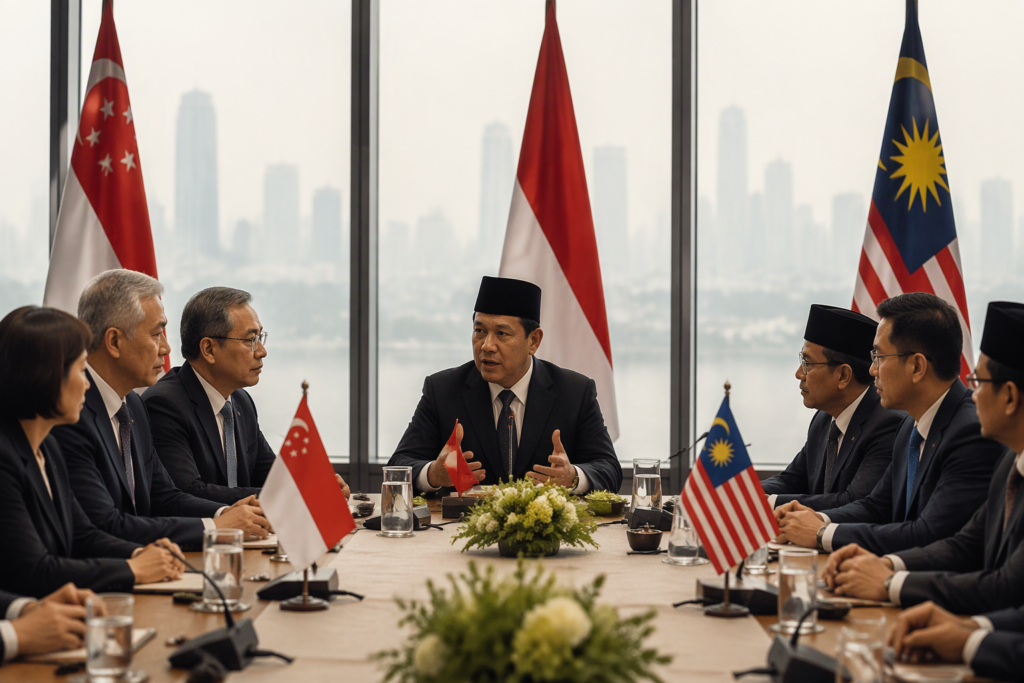
Sixteen firefighters lost their lives battling Indonesia’s worst blazes in over a decade before President Prabowo Subianto stood before regional leaders in Manila to say what his neighbors had waited months to hear: he was sorry for the choking indonesia wildfire haze.
The apology came during a plenary session at the ASEAN summit in the Philippine capital, addressing the thick, acrid smoke that has blanketed skies across Singapore and Malaysia. For months, toxic air from burning peatlands and forests disrupted daily life, grounded regional routines and strained diplomatic patience across Southeast Asia.
Also read: ASEAN Summit Opens in Manila as Energy and Trade Shocks Bite
Prabowo’s public contrition marks a distinct change in tone from Jakarta. Instead of deflecting blame or downplaying the damage, the Indonesian presidency openly conceded the regional toll of the disaster and pledged aggressive domestic crackdowns on the land-clearing practices driving the crisis.
What Prabowo told regional leaders in Manila
Speaking directly to his counterparts at the summit, Prabowo outlined the physical and human cost of containment efforts at home. His government deployed 71,000 forest firefighters across burning provinces, where 16 emergency workers died trying to control the infernos.
The president told fellow leaders that Indonesia has adopted a zero-tolerance policy against corporations responsible for illegal slash-and-burn clearing. According to official statements, Jakarta has already revoked permits for 17 firms and placed scores more under criminal review.
Philippine Foreign Minister Theresa Lazaro told reporters after the plenary meeting that delegates welcomed the transparency. She explained that Jakarta was frank and candid about the sheer scale of the blazes and the steps underway to extinguish them.
“We’ve revoked 17 concessions from companies. Meanwhile 26 companies are currently under investigation and 11 others have been charged. Another 23 companies are on the list to be charged.”
Targeting the companies behind the burns
Illegal burning on peat-rich soils across Sumatra, Borneo and Papua created the most severe forest fires Indonesia has recorded in 11 years. Farmers and industrial plantation operators routinely ignite timber and scrub during dry spells to clear ground quickly for palm oil and pulpwood crops.
National police are now investigating 104 separate businesses tied to the blazes. Besides prosecuting offenders, Prabowo announced his administration is preparing a dedicated government agency designed solely to improve fire prevention and early response.
The legal offensive follows weeks of simmering public frustration over previous official statements. In October, Syahganda Nainggolan, head of the Indonesian Government Communications Agency, provoked irritation in Kuala Lumpur and Singapore by brushing off the smoke and claiming Indonesian forests supply both neighbors with free oxygen when not burning.
Why transboundary haze treaties move so slowly
Both Singapore and Malaysia deliberately avoided public diplomatic confrontation over the recent spike in transboundary haze, choosing instead to offer equipment and assistance to help contain the hotspots. Behind closed doors, however, regional enforcement frameworks show clear structural limits.
Southeast Asian nations signed the ASEAN Agreement on Transboundary Haze Pollution back in 2002. The treaty legally binds all 11 member states to coordinate disaster management and reduce cross-border smoke through shared monitoring and mutual aid.
Yet the pact contains zero enforcement mechanisms and no authority to haul violators before international courts. Any dispute over compliance must be resolved entirely through diplomatic talks, leaving affected states with few tools to compel faster action on the ground.
Administrative progress has lagged as well. The treaty’s primary coordination office in Jakarta only opened its doors this April, nearly twenty-five years after member countries first approved its creation.
Where the fires and smoke stand now
Relief has arrived across the Malacca Strait, but nature did most of the work. Heavy seasonal rains rolled across western Indonesia over the past week, dousing active fire fronts in major timber belts.
The ASEAN Specialised Meteorological Centre officially issued a notice confirming that transboundary smoke haze had cleared from southern Southeast Asia. Satellite sweeps show fire counts plunging across Sumatra and Kalimantan as downpours continue to saturate parched peat deposits.
Attention now turns to whether Jakarta’s police will secure convictions against the 104 investigated firms before the next regional dry season begins next summer.
Source: Al Jazeera


