
Mysterious Carvings Found in Queen Charlotte’s Palace Reveal Historic Secrets
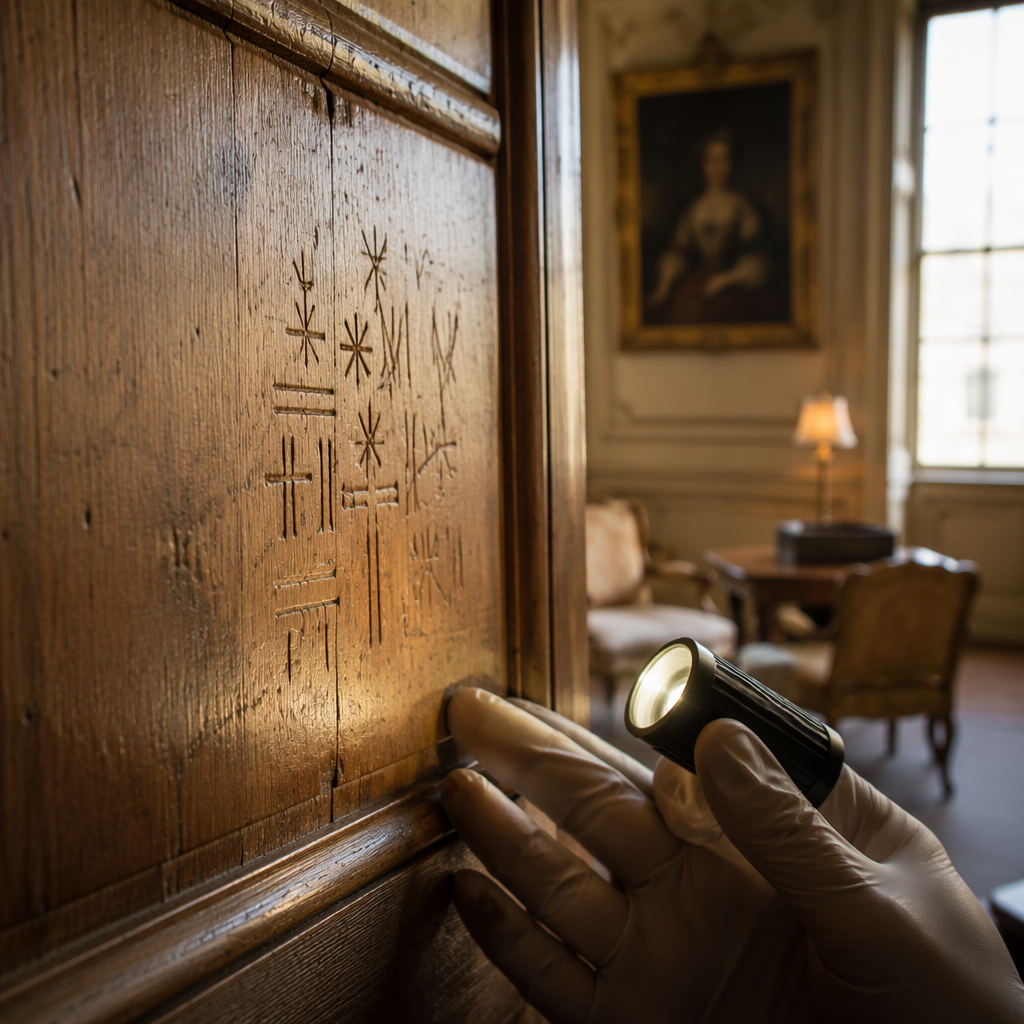
Conservators working on historic royal properties have identified a series of enigmatic symbols etched into woodwork and hidden surfaces, sparking fresh interest into Georgian heritage. The mysterious carvings found in Queen Charlotte’s palace offer a rare and intimate glimpse into the beliefs, daily routines, and superstitions of the Georgian royal household and the craftsmen who maintained it.
The markings, uncovered during detailed structural assessments and conservation work at Kew Palace—the intimate 18th-century retreat most closely associated with Queen Charlotte and King George III—have drawn the attention of historians and archaeologists alike. Analysts believe the incisions range from protective folk symbols to personal builder inscriptions left unnoticed for over two centuries.
Also read: How Growing AI Bubble Privacy Risks Could Expose Your Deepest Secrets
Discovery of Mysterious Carvings Found in Queen Charlotte’s Palace
The discovery occurred during routine conservation efforts aimed at preserving the aged timber frames and internal partitions of the residence. Heritage experts working within secluded corridors and previously concealed joinery noted intentional geometric incisions rather than standard wear and tear.
Kew Palace, situated within Kew Gardens in southwest London, served as a quiet sanctuary for Queen Charlotte and her family, particularly during the King’s prolonged bouts of illness in the late 18th and early 19th centuries. Because the palace underwent various restorations over the decades, sections of internal timber remained sealed behind later paneling and skirting, creating an unintended time capsule.
Specialists examining the incisions confirmed that the marks were carved using sharp iron hand tools, typical of 18th-century chisels or knives. Their hidden locations suggest they were never intended for public display.
Witch Marks and Apotropaic Beliefs in the Georgian Era
Preliminary evaluations suggest several of the designs resemble apotropaic marks, often colloquially called “witch marks.” Across Britain, people carved these protective folk symbols into door jambs, fireplaces, and floorboards to ward off evil spirits, witches, and misfortune.
Common forms of these markings include:
- Daisy Wheels (Hexafoils): Overlapping circular designs believed to trap malevolent forces within an endless maze.
- Marian Marks: Interlocking letters such as “VV” or “M,” invoking the protection of the Virgin Mary.
- Burn Marks: Deliberate scorch marks created with taper candles, intended to protect timber structures from catastrophic fires.
While such practices are widely documented in medieval castles and rural cottages, finding them within a high-status royal estate demonstrates that folk beliefs persisted well into the Georgian period across all levels of society.
Craftsmen Signatures or Royal Household Graffiti?
Not all the etchings appear to carry spiritual intent. Researchers point out that historic joiners and carpenters routinely marked structural beams with tally marks to guide assembly. Others may represent casual graffiti left behind by royal servants or sentries posted during tense periods of the King’s residence.
Historians emphasize that Queen Charlotte’s court was a bustling community comprising housekeepers, guards, botanists, and retainers. Any one of these inhabitants could have left personal traces during quiet shifts or renovations.
“These physical inscriptions provide an immediate human connection to the past,” said heritage researchers surveying the site. “They remind us that palaces were living workplaces, full of people with distinct anxieties, traditions, and skills.”
What Happens Next
Conservators plan to document the etchings using advanced digital photogrammetry and reflectance transformation imaging (RTI). These non-invasive imaging techniques highlight surface textures without risking damage to the fragile timber.
The resulting 3D models will be cross-referenced with national databases of historic graffiti and apotropaic marks to determine their exact age, typology, and provenance. Heritage officials also intend to incorporate their findings into future educational exhibits for visitors touring the estate.
In conclusion, the mysterious carvings found in Queen Charlotte’s palace underscore how even well-studied royal monuments still hold untold stories, bridging the gap between grand court history and the private lives of the people who walked its corridors.




1 Comment
Comments are closed.