
Rare Behaviors Show Elephant Grief: How Herds Mourn Their Dead
Recent field observations and scientific studies have brought unprecedented attention to elephant grief, revealing that the emotional lives of these massive mammals are far more intricate than researchers previously documented. While scientists have long known that elephants form tight-knit social bonds, emerging evidence shows rare, structured responses to death, ranging from solemn vigils to deliberate burials of deceased calves.
Wildlife biologists and field researchers studying both African and Asian elephant populations are documenting behaviors that point to genuine mourning processes. These findings provide fresh insight into comparative thanatology—the scientific study of death and the practices associated with it across different species.
Also read: Scientists Uncover Rare Behaviour Showing Elephant Grief in the Wild
Understanding Elephant Grief Through Scientific Observation
Scientists define grief in non-human animals through observable behavioral shifts, including altered routines, vocal distress, prolonged physical contact with carcasses, and social withdrawal. In elephants, these behaviors differ distinctly from casual curiosity or defensive reactions.
When an elephant dies, herd members often gather around the fallen individual in silence. Witnesses and researchers report seeing herd mates use their trunks to gently stroke the deceased elephant’s face, ears, and tusks. In several recorded cases, elephants attempt to lift fallen companions back onto their feet using their trunks and tusks, refusing to leave the body for hours or even days.
Unlike predatory interactions or territorial checks, these solemn encounters carry a distinct emotional weight. Elephants often emit low-frequency rumbles, trumpet in distress, or maintain complete silence—a stark deviation from their normal social communication.
Documented Mourning Rituals and Vigil Keeping
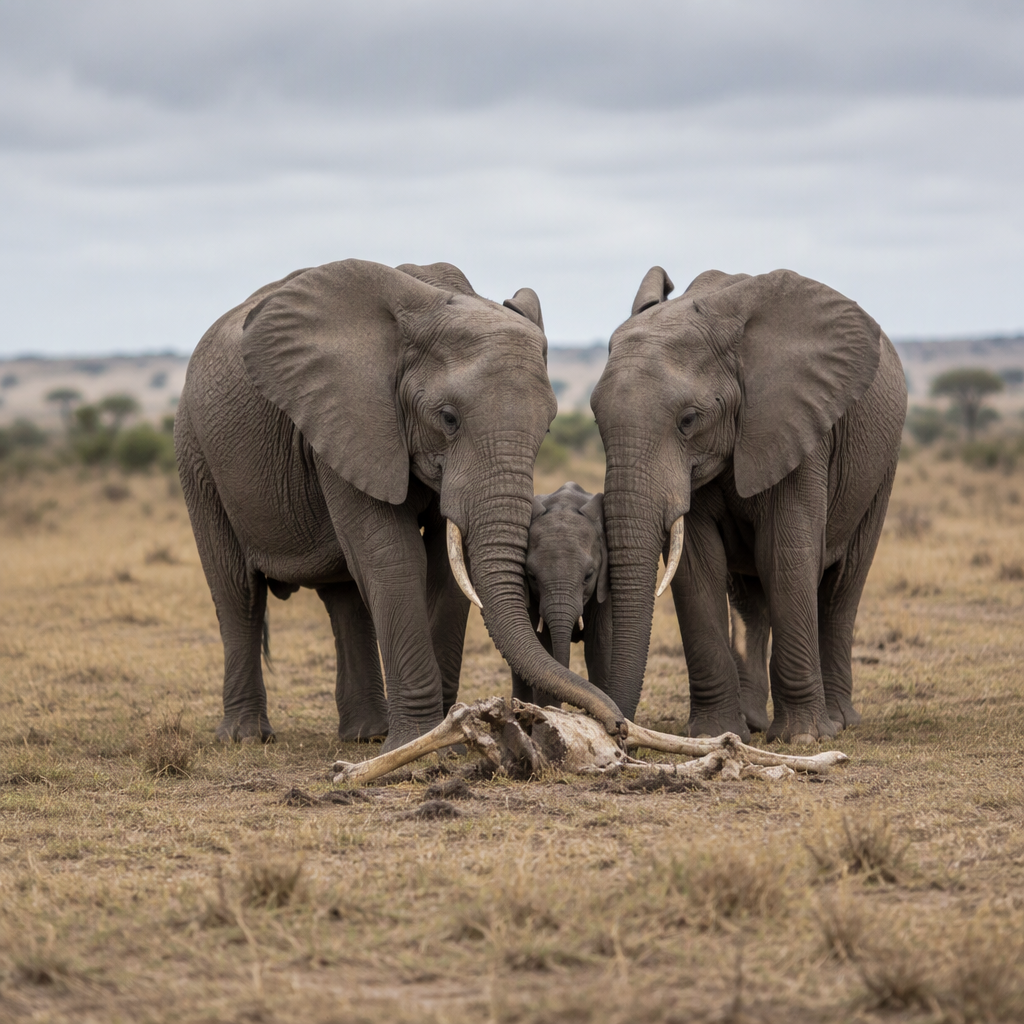
African elephants (Loxodonta africana) have long been observed interacting with the remains of their own kind, even long after decomposition. Research teams in Kenya’s Samburu National Reserve and Amboseli National Park have noted that unrelated herds will stop at the skeletal remains of deceased elephants, carefully smelling, touching, and turning the bones with their trunks and feet.
Key behaviors documented during these encounters include:
- Gentle tactile inspection: Elephants specifically focus on the skull and tusks, caressing contours with the sensitive tips of their trunks.
- Guarding the body: Family members frequently form protective cordons around a dead herd mate, driving away scavengers such as hyenas and vultures.
- Covering the remains: Individuals often pluck branches, soil, and dry leaves to place over the dead body before departing.
These actions indicate that elephants recognize individual members even in death and demonstrate a long-term memory of their social counterparts.
The Discovery of Asian Elephant Calf Burials
While African elephants have received widespread attention, groundbreaking research published in recent years has shed light on Asian elephants (Elephas maximus) in India. Researchers documenting herds in northern Bengal observed what scientists describe as intentional calf burials.
Field teams recorded multiple instances where elephant herds carried deceased calves across long distances before depositing them into drainage trenches in commercial tea estates. The adults laid the calves on their backs with their legs facing upward, subsequently covering the bodies with soil and mud.
Footprint analyses confirmed that multiple adult herd members participated in the process, packing the earth tightly over the young. After the burial, herds lingered briefly, produced loud vocalizations, and deliberately altered their standard migration corridors to avoid the burial site in subsequent weeks. Researchers consider this among the clearest examples of organized, ritualized communal response to infant loss in wild animals.
What Elephant Thanatology Reveals About Animal Cognition
The documentation of these rare actions challenges conventional boundaries between human and non-human emotional intelligence. Elephants possess a highly developed neocortex, an expansive hippocampus linked to memory, and complex spindle neurons, which are associated with empathy and social processing in humans and great apes.
Biologists emphasize that recognizing mourning in elephants is not anthropomorphism—the practice of projecting human feelings onto animals. Instead, rigorous empirical evidence confirms that the neurological and hormonal pathways governing stress, attachment, and bereavement are shared across several highly social mammalian lineages.
What Happens Next in Elephant Behavior Research
Conservationists and behavioral scientists are now integrating modern technology to study these behaviors without disturbing herds. Researchers are using non-invasive thermal imaging, acoustic monitoring arrays, and satellite tracking collars to assess how grief impacts elephant stress levels and herd decision-making.
Additionally, conservation groups emphasize that understanding elephant emotional trauma is vital for conflict management. As human-elephant conflict increases due to habitat loss, herds that experience sudden, violent deaths from train strikes, poaching, or electrocution exhibit signs of lasting social distress. Factoring behavioral health into wildlife corridors and protected zone planning has become an urgent priority.
Conclusion
The expanding record of rare behaviors showing elephant grief confirms that these animals experience profound loss when a family member dies. From quiet bone-touching rituals in the African savanna to communal calf burials in Asian tea plantations, the evidence demonstrates that elephants share a rare and poignant relationship with death. Recognizing this depth of emotion strengthens the scientific and ethical case for protecting elephant habitats worldwide.