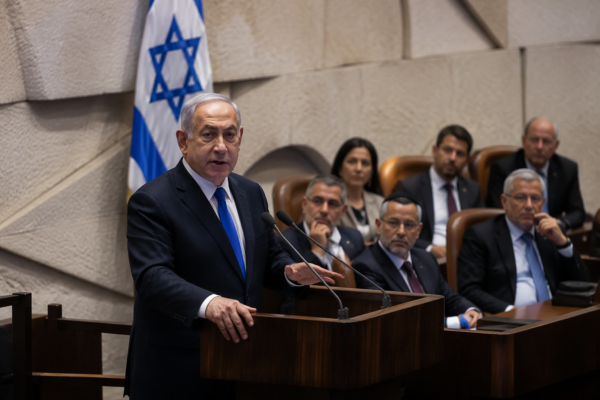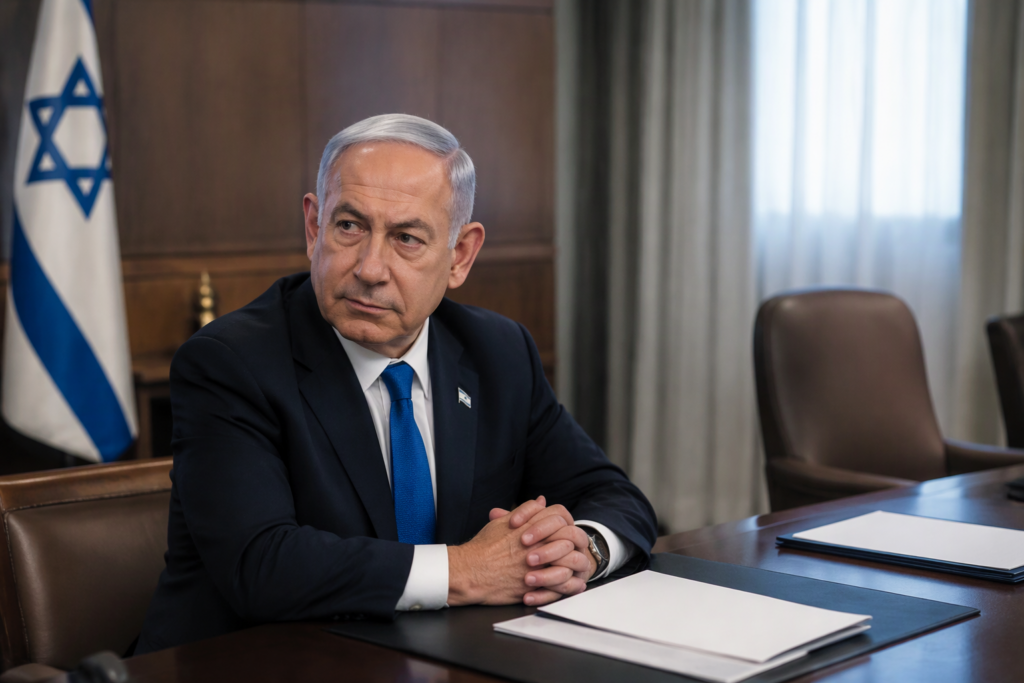

Questions regarding constitutional authority and executive limitations arise whenever leadership transitions into a transitional phase. As public attention focuses on governance, understanding the scope and powers of Israel’s interim PM provides crucial context for how Benjamin Netanyahu operates during a caretaker administration.
Legal Framework Governing the Powers of Israel’s Interim PM
Under Israeli constitutional practice and Basic Law: The Government, an interim or caretaker prime minister remains at the helm to guarantee administrative continuity. The fundamental principle is that the state must not experience a power vacuum, meaning the government continues to exercise executive duties until a newly formed administration is sworn into office.
Also read: Australia Tightens AI Oversight Rules After OpenAI Government Breach
Despite this continuity, the legal landscape places specific boundaries on transitional authority. Israeli jurisprudence establishes that a caretaker government lacks the fresh mandate of an elected parliamentary majority, requiring leaders to exercise heightened restraint in their executive actions.
Routine Administration Versus Major Policy Initiatives
The operational scope of a caretaker leadership centers heavily on maintaining essential public services and routine governance. Government ministries continue day-to-day functions, managing budgets that have already received legislative approval and enforcing established regulations.
However, major long-term commitments face severe restrictions. An interim prime minister generally cannot push forward controversial structural reforms or finalize irreversible strategic commitments without significant legal scrutiny. Precedents established by Israel’s High Court of Justice require caretaker cabinets to demonstrate urgent public necessity before taking actions that could bind future administrations.
Appointments and Public Sector Roles
Senior appointments represent one of the most strictly regulated areas for an interim administration. Filling high-level civil service posts, judicial benches, or regulatory positions with permanent appointees is typically discouraged or blocked during transitional phases.
In situations where vacancies occur in vital positions, interim leadership frequently resorts to temporary appointments or acting roles. This practice ensures administrative stability without depriving an incoming government of the prerogative to make permanent staffing decisions.
National Security and Emergency Powers
While domestic policy shifts face strict limitations, national defense represents an area where executive flexibility remains intact. An interim prime minister retains command authority over security agencies and emergency decision-making bodies to safeguard the nation.
Defense operations, urgent military responses, and critical intelligence actions proceed under standard operational protocols. Security cabinet consultations continue as needed, ensuring that necessary security measures are not compromised by political transitions.
Judicial and Legal Oversight
Throughout any caretaker period, legal supervision increases substantially. The Attorney General and legal advisors across ministries provide binding assessments on whether proposed executive actions exceed transitional authority.
Actions deemed non-essential or politically motivated risk immediate legal challenges before the Supreme Court. Consequently, executive decisions during an interim premiership must be carefully justified through documented administrative necessity.
Conclusion
Operating as an interim leader requires a continuous balance between maintaining state stability and respecting the constitutional constraints of a transitional mandate. While day-to-day operations and national security remain fully functional, expansive policy overhauls and permanent senior appointments remain firmly restricted until a permanent government is established.
Source: Al Jazeera