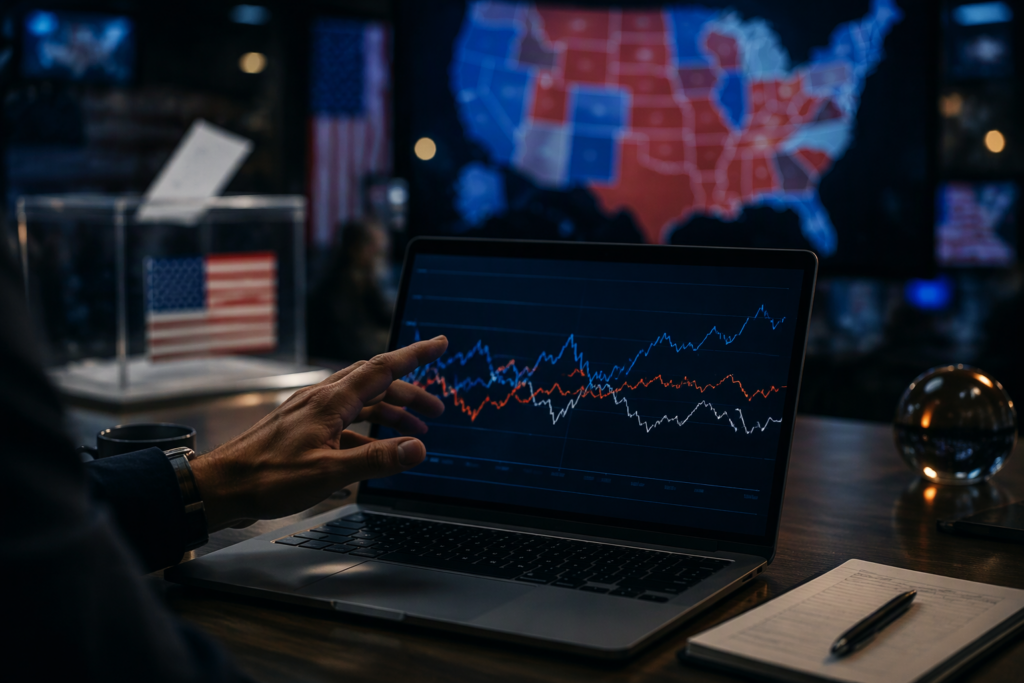

As election results rolled in, prediction markets emerged as major beneficiaries of the political cycle, having attracted nearly $2 billion in wagers on the US midterms. The unprecedented volume highlights a growing appetite among traders and observers to treat electoral outcomes as tradable financial assets.
The Growing Influence of Prediction Markets
In recent election cycles, betting exchanges and forecast trading platforms have increasingly competed with traditional public opinion polling. Instead of answering survey questionnaires, participants place real money on political outcomes, creating dynamic odds that adjust continuously with incoming news, debate performances, and voter turnout reports.
Also read: How Prediction Markets Cut Through Political Spin in the Midterms
During the US midterms, this activity reached new heights. With nearly $2 billion committed across various races, the platforms demonstrated significant liquidity and widespread participation from both retail traders and institutional market participants.
Nearly $2 Billion in Bets Signal a Shifting Industry
The influx of nearly $2 billion underscores how political forecasting has evolved into a lucrative sector. Proponents argue that financial stakes incentivize participants to gather accurate information, potentially offering clearer probabilistic forecasts than standard polls.
High trading volumes across congressional races, gubernatorial contests, and control of both legislative chambers provided market operators with substantial fee revenue and heightened visibility throughout the campaign season.
Looking Ahead to Future Electoral Contests
The commercial success of election trading during the midterms raises important questions about the future of political speculation. Observers continue to assess the accuracy of market odds relative to final outcomes, as well as the regulatory environment surrounding election-based financial contracts.
Regardless of how specific races concluded, the scale of participation demonstrates that prediction platforms have established themselves as prominent fixtures in modern campaign coverage and political finance.
Source: BBC