
The Rise of AI Election Ads in US Midterms Campaigns Reshapes Modern Politics
Political campaign operations across the United States are entering a transformative era as generative artificial intelligence reshapes how candidates communicate with the electorate. In congressional and statewide races, the rapid emergence of AI election ads has introduced both unprecedented production efficiencies and serious concerns over deceptive synthetic media, testing the preparedness of election administrators and digital platforms alike.
Campaign managers, political action committees (PACs), and digital consultants are deploying generative tools to write copy, generate voiceovers, produce realistic imagery, and target micro-demographics at a fraction of traditional advertising costs. While political strategists argue these tools democratize campaigning for underfunded candidates, watchdogs warn that unchecked synthetic content threatens to undermine public trust in electoral outcomes.
Also read: LinkedIn Billionaire Who Visited Epstein’s Island Bankrolling Democratic Attack Ads
How Political Strategists Are Deploying AI Election Ads
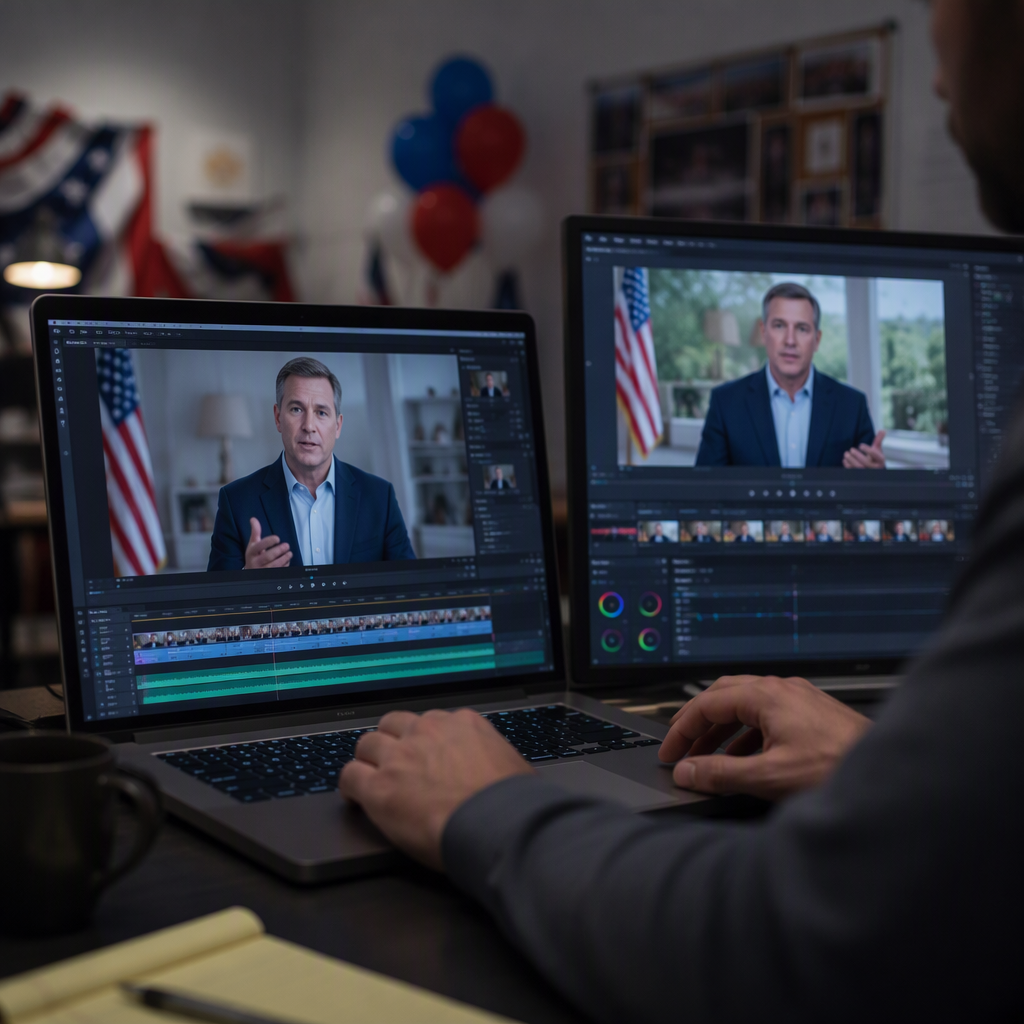
The transition toward automated media generation has accelerated across modern midterm races. Producing high-definition television and digital advertisements previously required production crews, video editors, voice talent, and weeks of coordination. Today, generative models allow creative teams to assemble persuasive political spots in hours.
Campaign operatives use these systems for multiple strategic functions:
- Hyper-targeted messaging: Drafting localized ad copy tailored to specific voter segments based on zip codes or online behavioral metrics.
- Synthetic voiceovers and translations: Generating multi-language audio to reach non-English speaking constituents without hiring commercial translators.
- Scenario visualization: Creating dramatic, simulated imagery to depict policy outcomes, economic downturns, or border scenarios that never occurred in reality.
These capabilities lower the barrier to entry for local and state candidates operating on limited budgets, allowing them to compete directly against well-funded incumbents on digital channels.
Disinformation Concerns and the Proliferation of Deepfakes
Despite legitimate operational efficiencies, the darker side of generative media is causing widespread alarm. Unregulated generative tools enable bad actors and outside groups to create convincing deepfakes that depict rival candidates saying inflammatory statements or attending events they never visited.
Researchers have documented synthetic voice clones deployed through automated robocalls to mislead voters about polling locations and ballot deadlines. Furthermore, the sheer accessibility of text-to-video platforms makes it difficult for fact-checkers to debunk deceptive media before viral content reaches millions of prospective voters.
Digital forensics experts also highlight the psychological impact of the “liar’s dividend.” As the public learns that videos and recordings can be easily fabricated, candidates caught in genuine scandals can dismiss authentic, incriminating evidence as mere artificial fabrications.
Regulatory Hurdles: FEC, Congress, and Tech Platform Policies
Federal and state institutions are scrambling to establish guardrails, yet comprehensive legislation remains stalled in Washington. The Federal Election Commission (FEC) has debated whether existing prohibitions against the fraudulent misrepresentation of federal candidates apply directly to synthetic and AI-generated media.
In the absence of clear federal statutes, state legislatures have taken independent action. Several states have enacted laws mandating clear disclosure labels on deceptive audio-visual media distributed close to an election date, with some jurisdictions criminalizing malicious deepfakes targeting candidates.
Simultaneously, major technology companies—including Meta, Google, and TikTok—have updated their community standards to require mandatory disclaimers on political advertisements featuring synthetically altered or generated audio, video, or images. Enforcement, however, remains inconsistent, with unlabeled synthetic content frequently slipping past automated detection filters.
What Happens Next for Campaign Integrity
As campaigns gear up for decisive midterm ballots, transparency advocates are pushing for standardized watermarking technologies and cryptographic provenance standards, such as C2PA, to trace the origins of digital media. Digital literacy initiatives are also expanding to help voters recognize the markers of synthetic footage, including unnatural audio cadences and visual artifacts.
The broader adoption of AI election ads signals a fundamental shift in political communication. As the technology continues to mature, balancing the benefits of affordable campaign production with the imperative to protect electoral integrity remains one of the defining challenges of modern American democracy.