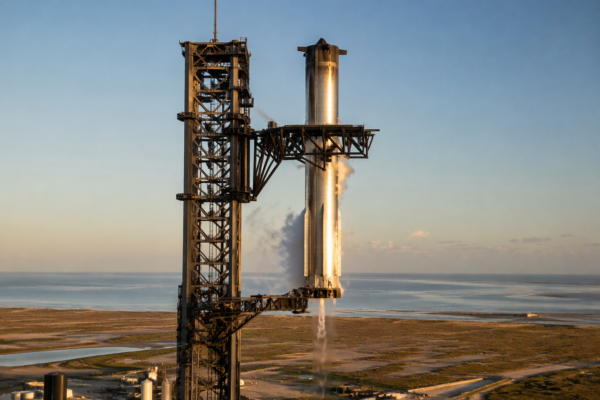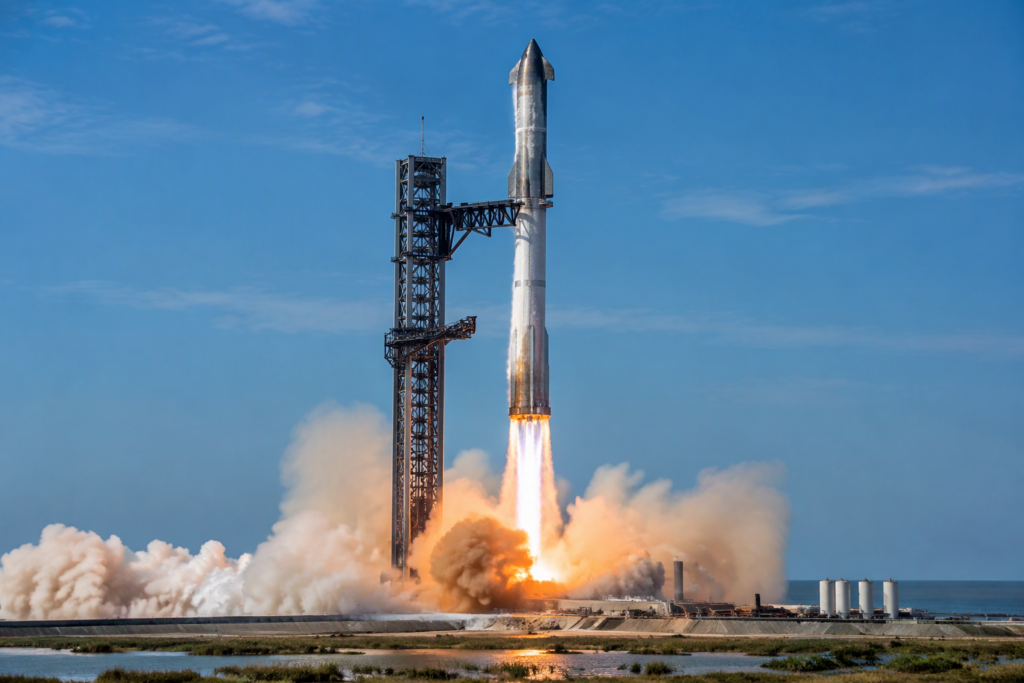

SpaceX lifted off from south Texas with an unprecedented recovery goal: catching both stages of the world’s largest rocket right out of the air. The launch of Starship Flight 15 from the company’s Starbase facility set out to push reusable rocketry into territory no space program has reached before.
The test flight paired a heavy operational payload with twin recovery attempts. While previous tests focused on landing the first-stage booster back at the launch mount, this mission raised the stakes by targeting the return of both halves of the vehicle.
Also read: Microsoft AI Beats Doctors in Simulated Diagnosis Test, Study Shows
The Dual Catch Goal for Starship Flight 15
Engineers designed this mission around two simultaneous recovery objectives. SpaceX aimed to execute the first dual catch of both the upper-stage rocket and the massive Super Heavy booster back at the launch site.
Catching the Super Heavy booster requires the towering steel structure at Starbase to trap the slowing rocket between mechanical arms as it descends. Attempting to catch the upper-stage Starship vehicle as well tests whether the entire system can return directly to the pad without touching down on land or splashing into the sea.
Deploying 26 Starlink Satellites into Orbit
Beyond testing vehicle recovery, the mission carried an active orbital payload. The spacecraft aimed to deploy 26 Starlink satellites into low Earth orbit during its flight path.
SpaceX relies on its Starship system to deliver larger batches of internet satellites than its Falcon 9 workhorse can manage. Proving the ship can release satellites while preserving both flight stages is a requirement for running regular commercial missions.
What to Watch Next at Starbase
Ground teams will review telemetry data and structural inspections from the booster and upper-stage recovery attempts to verify how both vehicles handled descent heating and guidance. SpaceX will use those findings to clear hardware for its next orbital test window from Texas.
Source: Fox News