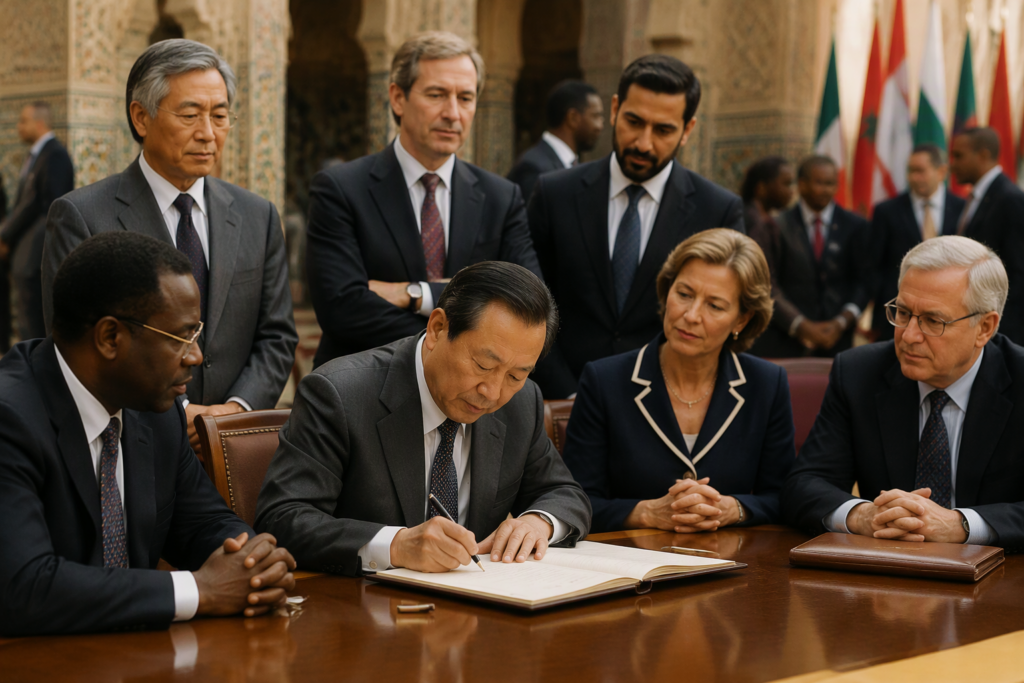
Twenty-three thousand pages of legal text sat on the tables in Marrakesh before 120 international delegates signed off on a system that still runs modern commerce. The gathering in Morocco in 1994 brought together trade ministers and ambassadors to create the World Trade Organisation, replacing informal arrangements with an institution designed to govern global commerce.
The meeting was significant because it changed the way countries handled their economic borders. Prior to this agreement, countries resorted to imposing unilateral trade sanctions to influence trade agreements. The agreement created a legitimate process for countries to enforce trade rules and resolve dispute regarding trade agreements.
Also read: Burnham EU Deal: PM Defends £17bn Pact Against Backlash
The scramble to sign the Marrakesh agreement
Pulling off the historic meeting in North Africa pushed organizers to their limits. The build-up to signing the Marrakesh agreement involved weeks of tension, last-minute negotiations, and an overwhelming paper trail that had to be verified across multiple languages and jurisdictions.
Said El Hachimi, a young Moroccan trade official, played a key role in the logistics of the meeting. He worked with local and international staff to prepare for the final session and ensure that ministers did not obstruct the process with last minute negotiations. During the final hours of the conference, the operational stress of making sure the logistics were in order, made him miss the royal banquet in his honor.
Inside the birth of the World Trade Organisation
Before the World Trade Organisation existed, global business relied on the General Agreement on Tariffs and Trade, an interim framework established after the Second World War. That system lacked a permanent institutional structure and struggled when disputes escalated between major economic powers.
The 1994 Marrakesh treaty gave the new organization genuine authority. When governments accused one another of unfair tariffs, export subsidies, or non-tariff barriers, the new framework allowed panels to evaluate the evidence and issue binding rulings. By the time delegates put pen to paper, they had built the architecture for a rules-based system of global trade.
How the 1994 summit affects trade today
If you trace the history of modern day trade negotiations, you’ll find the foundations were established in Morocco. In 1994, major breakthroughs made in that year’s negotiations created universal standards for customs and border controls, protections for intellectual property, and emerging markets.
In the last few years, the WTO has faced huge challenges due to geopolitical tensions and an increase in national subsidy programs. The Marrakesh accords remain the legal foundations of the WTO and without them, international trade would face a lot of instability.
The next important challenge the system would face is the upcoming WTO ministerial meetings to discuss reforms to the Appellate Body that have been long-pending.
Source: BBC


