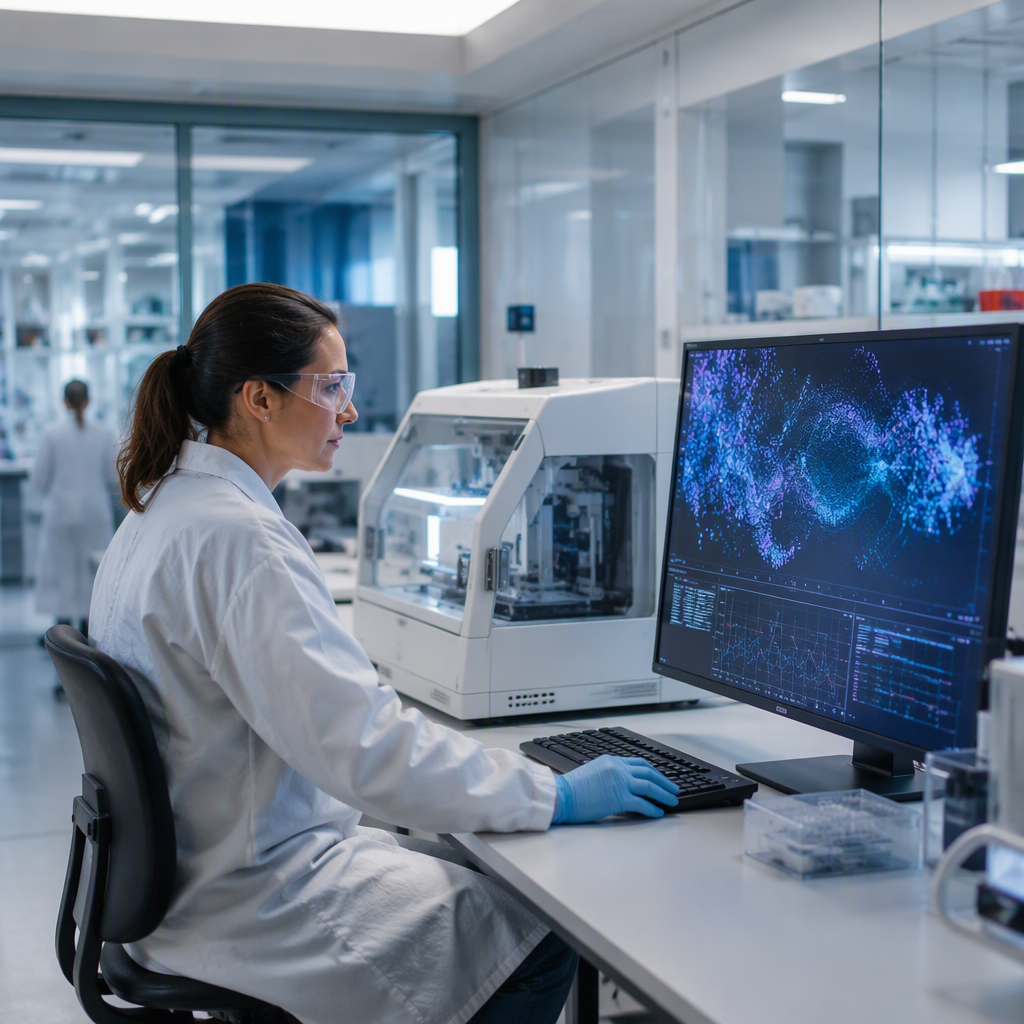

UK to Invest £100m in World-First AI Biosecurity Lab
The United Kingdom has announced a £100 million investment to establish a world-first AI biosecurity lab, marking a significant step to protect against dangerous biological threats and bolster global health defenses. The state-of-the-art facility will combine frontier artificial intelligence with life sciences research to monitor, evaluate, and prevent biological risks before they cause harm.
Ministers confirmed the dedicated funding as part of the UK’s broader strategy to lead in frontier AI governance and scientific safety. The initiative addresses growing concerns from intelligence agencies, public health leaders, and scientists regarding the rapid convergence of generative AI and synthetic biology.
Also read: Life in a Remote Station: Surviving Extreme Isolation at the Edge of the World
Why the UK Is Building a Dedicated AI Biosecurity Lab
Advances in artificial intelligence have revolutionized biology, enabling researchers to predict complex protein structures and design custom therapeutics in record time. However, national security officials warn that the same computational tools could lower barriers to creating hazardous toxins or engineering synthetic pathogens.
The new AI biosecurity lab aims to address this dual-use dilemma. By developing specialized defenses, safety benchmarks, and real-time monitoring tools, the facility will identify potential vulnerabilities in biological foundation models before public deployment.
The laboratory will work closely with national security bodies, the UK Health Security Agency (UKHSA), and academic institutions. Its primary mission is to ensure that scientific innovation continues safely without compromising public safety.
Core Capabilities and Strategic Priorities
The £100 million allocation will support infrastructure development, high-performance computing resources, and top-tier scientific talent across multiple disciplines. Key focus areas include:
- AI Model Red-Teaming: Stress-testing advanced biological design tools to evaluate whether they can generate restricted chemical agents or viable biological weapons.
- Pathogen Surveillance: Harnessing AI algorithms to detect novel or altered pathogens in wastewater, clinical samples, and genetic databases ahead of potential outbreaks.
- DNA Synthesis Screening: Creating automated, standardized safeguards for commercial gene-synthesis providers to prevent the unauthorized production of dangerous genetic sequences.
- Countermeasure Acceleration: Utilizing computational biology models to rapidly simulate and design targeted vaccines, antibodies, and diagnostics against emerging infectious agents.
Strengthening Global AI and Biosafety Governance
The initiative builds on the foundational work of the UK AI Safety Institute, which has spearheaded global efforts to assess national security risks tied to advanced foundation models. British officials emphasize that biological risks require deep domain expertise that conventional software testing cannot provide alone.
International coordination will also remain a central pillar of the lab’s operations. The UK plans to share non-sensitive findings and evaluation standards with international partners, including the United States, European allies, and multilateral health organizations, to establish enforceable global biosecurity guardrails.
What Happens Next
Work on the facility’s governance framework, location selection, and initial procurement begins immediately. The UK government expects the first phase of testing protocols to roll out over the coming year.
A formal advisory panel comprising computational biologists, biodefense specialists, and ethics researchers will oversee the laboratory’s operational standards. Public consultations and partnerships with commercial biotechnology leaders are expected in the months ahead.
Conclusion
As biological design software becomes increasingly capable, preemptive oversight has moved to the top of the international defense agenda. By launching this dedicated AI biosecurity lab, the UK seeks to set global benchmarks that safeguard humanity from catastrophic biological risks while protecting the future of computational medicine.