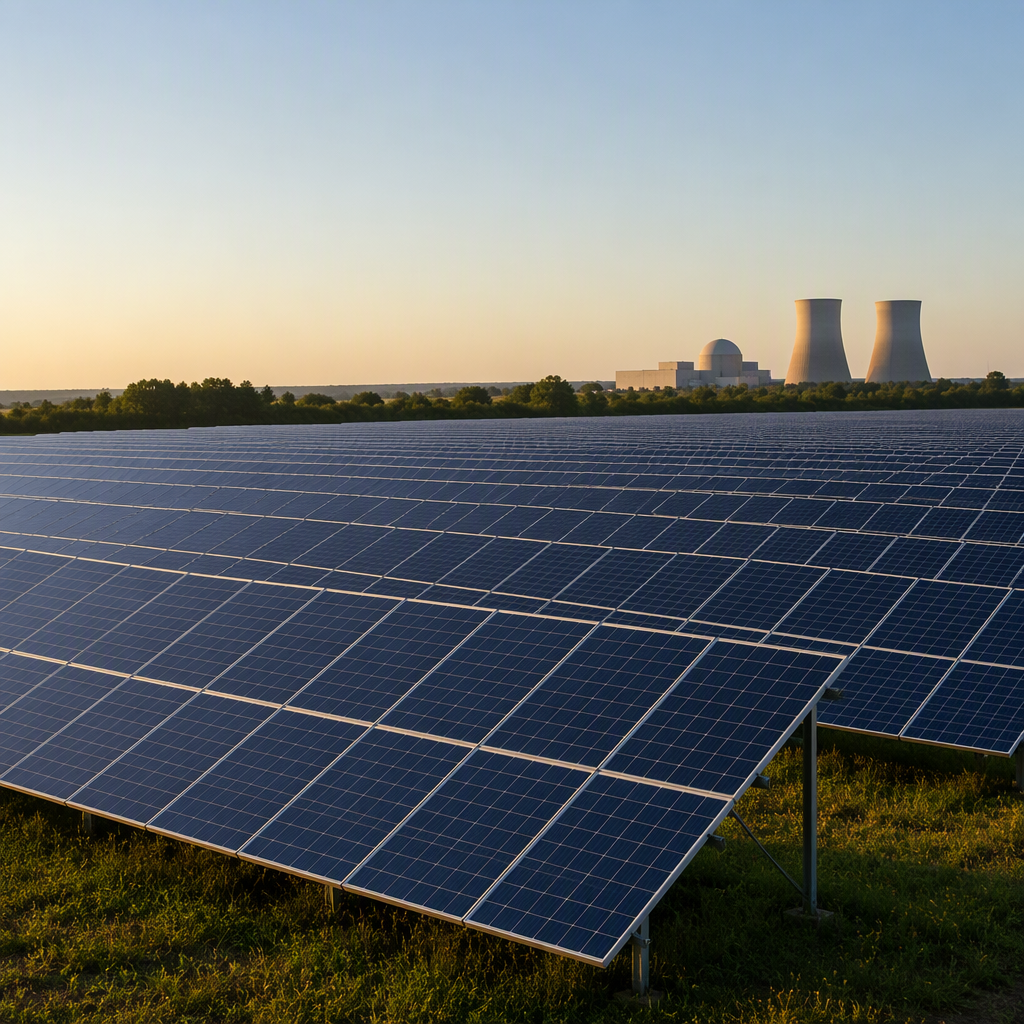

Solar Power vs Nuclear: How Cheap Solar Is Eclipsing Atomic Energy
A staggering collapse in production costs has triggered an unprecedented deployment boom for renewable energy, with analysts noting that in the modern debate over solar power vs nuclear, solar is rapidly outpacing atomic energy in scale and speed. Driven by massive industrial manufacturing and technology gains, solar photovoltaic installations now add hundreds of gigawatts to global grids each year, fundamentally reshaping the global energy landscape.
Energy analysts increasingly describe modern solar panel prices as “offensively cheap.” Over the past decade, module prices have dropped by roughly 90 percent, transforming solar from a heavily subsidized niche into the most affordable source of new electricity generation in history.
Also read: Solar Power Surpassing Nuclear: How Plunging Costs Are Reshaping Global Energy
The Economics Driving ‘Offensively Cheap’ Solar Panels
The primary driver behind this transformation is manufacturing scale and supply chain optimization, predominantly centered in East Asia. Giant wafer foundries and polysilicon plants have generated an unprecedented glut of photovoltaic panels, pushing prices down to pennies per watt.
Unlike conventional thermoelectric power plants, solar technology follows Wright’s Law of industrial learning. Every time cumulative global manufacturing capacity doubles, unit costs fall by a predictable percentage. Consequently, developers can purchase, transport, and install solar modules faster and at lower initial capital outlays than any other generation technology.
By contrast, nuclear power remains dominated by massive custom engineering, stringent regulatory timelines, and high financing charges that escalate when projects face multi-year construction delays.
Solar Power vs Nuclear: Differing Speeds and Economics
While nuclear facilities provide reliable, round-the-clock baseload generation, their development timelines rarely match the urgent pace of rising electricity demand. Building a conventional nuclear reactor typically requires between 8 to 15 years from permitting to commercial operation, carrying price tags that frequently exceed $10 billion.
In contrast, a commercial-scale solar farm can be financed, constructed, and grid-connected within 12 to 24 months. Total global installed solar capacity surpassed nuclear operational capacity several years ago and now adds more peak capacity in a single quarter than the entire commercial nuclear sector builds in a decade.
Energy specialists point out that direct capacity comparisons must account for capacity factors. Nuclear reactors often operate at an availability rate above 90 percent, whereas solar panels generate electricity only during daylight hours, averaging capacity factors between 15 and 30 percent depending on geography. However, because solar modules are now so inexpensive, developers can overbuild solar capacity and pair it with utility-scale battery systems while remaining financially competitive with traditional alternatives.
Addressing the Intermittency and Grid Bottlenecks
The swift ascendance of photovoltaic power is not without technical hurdles. The rapid surge in daytime electricity generation creates operational friction for aging transmission networks, leading to curtailment in power markets from California to northern Europe.
Grid operators are actively responding through two primary mechanisms:
- Utility-scale battery deployment: Four-hour and eight-hour lithium iron phosphate (LFP) battery installations are growing rapidly alongside solar arrays, capturing midday surplus power to discharge during evening peak hours.
- Transmission modernization: National grids are investing in high-voltage direct current (HVDC) power lines to transport clean electricity from sunny, remote regions to concentrated urban load centers.
What Happens Next
Governments and utilities are recalibrating their long-term power development blueprints. While small modular reactors (SMRs) and reactor life extensions remain focal points for heavy industry and artificial intelligence data centers seeking constant clean power, solar continues to absorb the bulk of new capital spending.
Energy agencies project that solar photovoltaic power will generate more total annual electricity than nuclear energy well before 2030, marking a historic turning point in worldwide power infrastructure.
Conclusion
The shifting balance between solar power vs nuclear illustrates how market economics and industrial manufacturing can disrupt established utility models. While atomic energy retains a vital role in providing firm, carbon-free baseload power, the sheer affordability and deployment speed of solar power have cemented its position as the engine of the global energy transition.