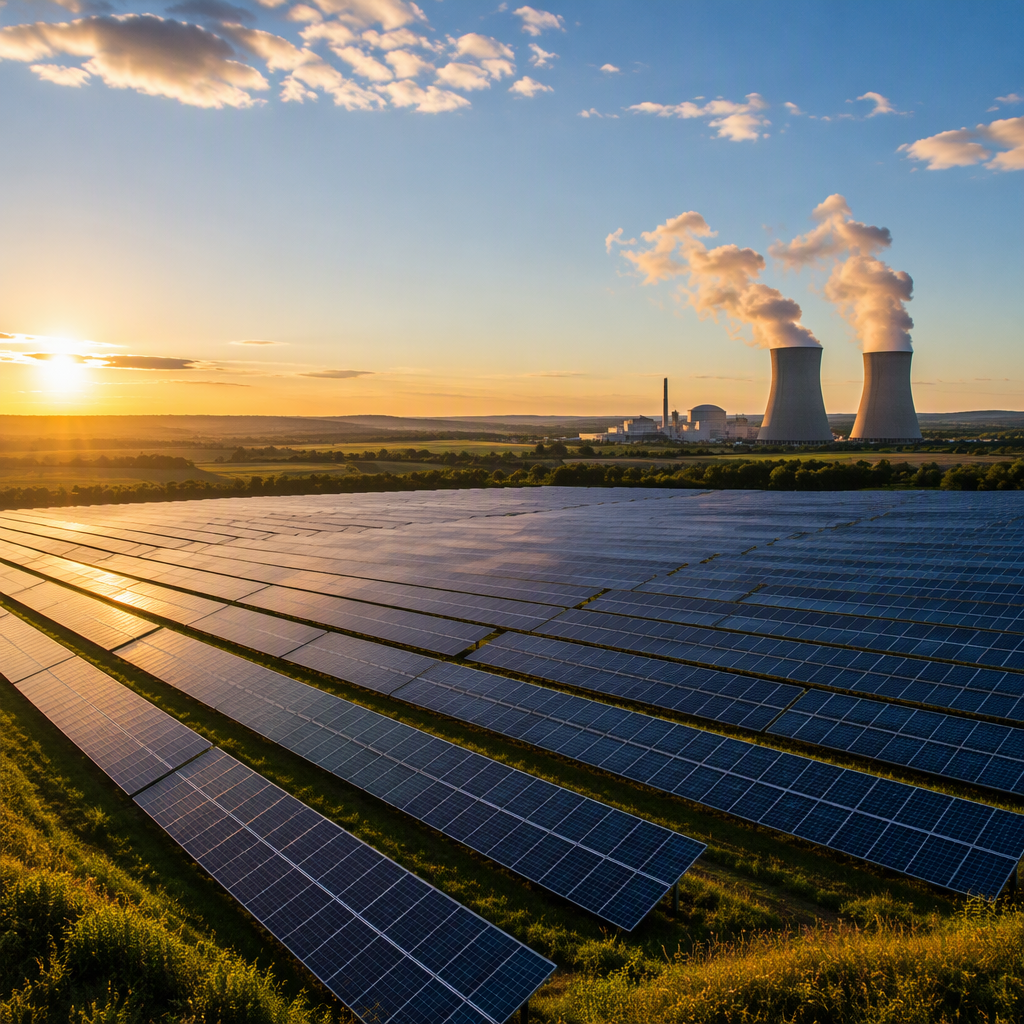

‘It’s Offensively Cheap’: How Solar Power Is Quietly Becoming Bigger Than Nuclear
The global energy landscape is undergoing a historic shift as solar power rapidly accelerates past conventional generation sources, challenging long-standing assumptions about how the modern grid must operate. Driven by unprecedented declines in manufacturing costs and record deployment rates, photovoltaic installations have already surpassed nuclear energy in total installed capacity and are now closing the gap in overall electricity generation.
Energy analysts frequently describe the economics of contemporary photovoltaics with a mixture of shock and awe. Once viewed as an expensive, niche alternative to fossil fuels and atomic reactors, solar power has become so affordable that industry experts describe current module pricing as “offensively cheap.”
Also read: Solar Power vs Nuclear: How Cheap Solar Is Eclipsing Atomic Energy
The Dramatic Cost Collapse of Photovoltaics
The primary driver behind this transformation is manufacturing scale and supply chain efficiency, predominantly centered in Asia. Over the past four decades, the cost of solar modules has followed Swanson’s Law, dropping by roughly 20 percent every time global cumulative shipping capacity doubles.
In recent years, benchmark module prices have plunged well below 15 cents per watt, reaching historic lows. This price collapse makes utility-scale solar installations the cheapest source of new electricity generation in history across most major economies, according to data from the International Energy Agency (IEA) and BloombergNEF.
In contrast, new nuclear projects in Western nations have faced persistent schedule delays, stringent regulatory reviews, and multi-billion-dollar cost overruns. While existing nuclear reactors continue to supply steady, low-carbon baseload power, building new atomic plants requires decade-long timelines and massive capital commitments that few private investors are willing to shoulder without extensive government underwriting.
Capacity Versus Output: How Solar Power Compares to Nuclear
To understand how solar power is rivaling nuclear energy, industry analysts separate installed capacity from actual electricity output. Because the sun does not shine at night and weather conditions fluctuate, solar panels have lower capacity factors—typically between 15% and 25%—compared to nuclear reactors, which regularly achieve capacity factors exceeding 90%.
However, the staggering volume of global solar installations is overcoming that mathematical disadvantage:
- Installed Capacity: Total global solar capacity crossed 1.5 terawatts (TW) and continues to add hundreds of gigawatts annually, easily eclipsing the world’s commercial nuclear fleet, which stands at roughly 375 to 400 gigawatts (GW).
- Annual Generation: While nuclear reactors produce approximately 2,600 terawatt-hours (TWh) of electricity each year, solar output has surged past 1,600 TWh annually and is growing at an exponential pace.
- Deployment Speed: A utility-scale solar farm can be financed, permitted, and constructed in 12 to 24 months, whereas a standard nuclear plant often requires 10 to 15 years from planning to grid interconnection.
Forecasters project that global annual solar electricity generation will surpass total nuclear generation before the end of the decade, marking a major milestone in global utility operations.
Storage and Grid Balancing Redefine Reliability
The chief historical critique of solar power has been its intermittency. For decades, grid operators relied on nuclear and fossil fuel plants for round-the-clock baseload power to maintain grid stability.
That paradigm is shifting due to the parallel cost reduction in utility-scale lithium-ion battery storage systems. Paired with battery installations, solar farms are increasingly capable of storing surplus daytime energy and delivering it during evening peak demand hours. In regions like California, Texas, and southern Australia, battery storage charged by midday solar has begun replacing natural gas peaker plants during critical evening hours.
What Happens Next
The pace of the solar transition shows little sign of deceleration. In the coming years, policy frameworks and infrastructure developments will focus on three main areas:
- Grid Expansion: Upgrading transmission lines will be vital to connect remote desert solar arrays to urban industrial centers.
- Trade and Manufacturing Security: Western governments are investing heavily in domestic manufacturing subsidies, seeking to diversify supply chains beyond dominant Asian producers.
- Hybrid Systems: Rather than viewing solar and nuclear as strict adversaries, planners are evaluating hybrid clean grids where solar provides cheap bulk energy and existing nuclear fleets deliver firm carbon-free power during prolonged winter lulls.
Conclusion
The economic reality of electricity generation has changed permanently. With module prices sitting at record lows, solar power has evolved from an experimental green technology into an economic juggernaut reshaping global energy markets. While nuclear power remains an essential source of low-carbon electricity, the sheer speed, modularity, and affordability of solar installations ensure that the solar revolution will define the future of global power generation.