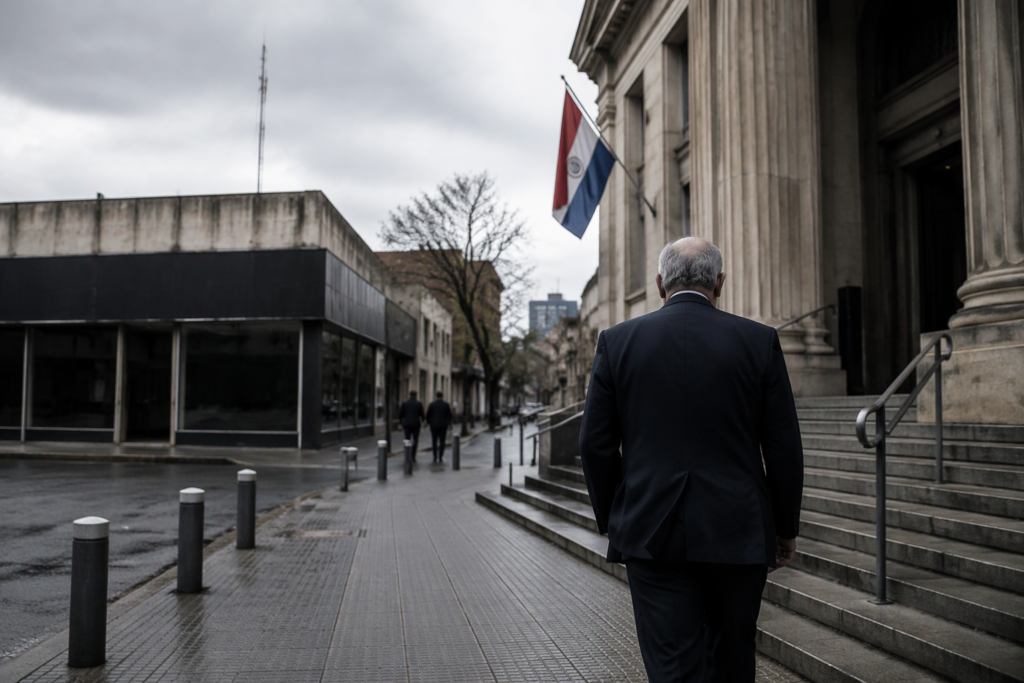

Legal authorities have taken formal action as Paraguay’s former president charged in connection with a catastrophic banking crisis that paralyzed the nation’s financial sector. The indictment follows the turbulent ouster of former president Santiago Peña, whose administration collapsed amid severe economic fallout.
Legal Action as Paraguay’s Former President Charged Over Crisis
Prosecutors brought charges against Santiago Peña following a comprehensive inquiry into the bank collapse that destabilized the country. The institutional failure led directly to Peña’s removal from power as political pressure escalated rapidly.
Also read: Paraguay Banking Crisis: What the Ueno Collapse Means for Financial Stability
Authorities are examining executive oversight and decision-making during the period leading to the collapse. The formal filing of charges represents a pivotal moment in holding leadership accountable for national financial emergencies.
Devastating Fallout for Millions of Depositors
The collapse triggered immediate and widespread distress across the country. Millions of people suddenly found themselves locked out of their accounts, completely unable to access their money for basic needs or business operations.
The liquidity freeze paralyzed commercial activity and sparked widespread public anger. With citizens unable to retrieve their personal savings, confidence in the financial sector eroded quickly, creating an untenable situation that accelerated the president’s removal from office.
Accountability and Next Steps for Paraguay
The ongoing proceedings against Peña highlight the severe political and legal repercussions of systemic financial failures. Regulators and judicial officers continue to examine the structural weaknesses that enabled the institution to fail.
As the legal case proceeds through the courts, attention remains focused on restoring public stability and ensuring accountability for the millions of citizens harmed by the banking disaster.
Source: BBC