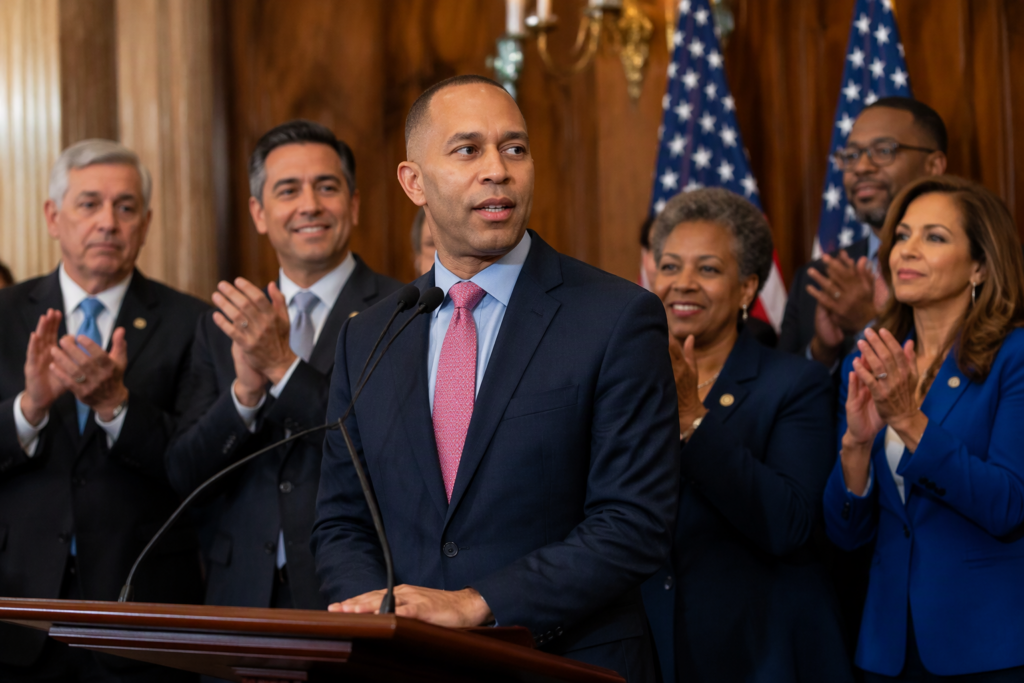
When the new Congress convenes next month, Hakeem Jeffries stands just one floor vote away from making history as the first Black lawmaker to hold the Speaker’s gavel.
House Democrats took the formal step on Wednesday to place him in line for the chamber’s top post, backing him in a closed-door meeting on Capitol Hill. The vote cements his position at the head of a incoming majority that will control the House of Representatives when lawmakers take their seats in January.
Also read: House Speaker Vote: How Jeffries and Congress Pick Leaders
The shift in power restores Democrats to the House majority and puts their leader second in line to the American presidency, behind only the vice president.
The internal vote that picked Hakeem Jeffries
Democrats gathered behind closed doors on Wednesday to vote on their leadership roster for the upcoming congressional term. Jeffries secured his party’s nomination in a 251-11 ballot, winning over nearly the entire caucus.
The result reaffirmed the grip he has held on the caucus since he first took over as minority leader in 2023. Even with that lopsided total, eleven lawmakers from the party’s left wing declined to back him, casting dissenting votes in the private session.
His victory in the internal party vote ensures he will run as the unified Democratic choice on the House floor.
A firm majority waiting in January
The party enters the next session with a comfortable numerical advantage that clears Jeffries’ path to the speaker’s chair. As of Wednesday, Democrats have locked down at least 257 seats in the House, well past the 218 threshold needed to control business on the floor.
Seven congressional races across the country remain uncalled as final ballots are tallied. Even without those final outcomes, the party’s margin gives leadership a working buffer to manage daily legislative business without needing opposition votes.
That cushion also means the small group of left-wing holdouts from Wednesday’s internal meeting will lack the numbers to block his path during the full chamber vote.
What changes when the gavel changes hands
Holding the gavel confers enormous constitutional and legislative authority on the House leader. Beyond setting which bills reach the floor and guiding committee assignments, the Speaker holds a formal post in the constitutional line of succession directly following the vice president.
Jeffries spent the last two years running the caucus from the minority side of the aisle. Taking the speaker’s office shifts his role from mounting parliamentary resistance to directing the actual legislative calendar.
Because his party holds clear control of the chamber, his election to the post is widely expected to succeed without the prolonged multi-ballot standoffs seen in recent congressional sessions.
The floor vote to watch on 3 January
The final, official hurdle comes when all 435 members of the new House assemble on 3 January to cast their public ballots for Speaker.
Source: BBC