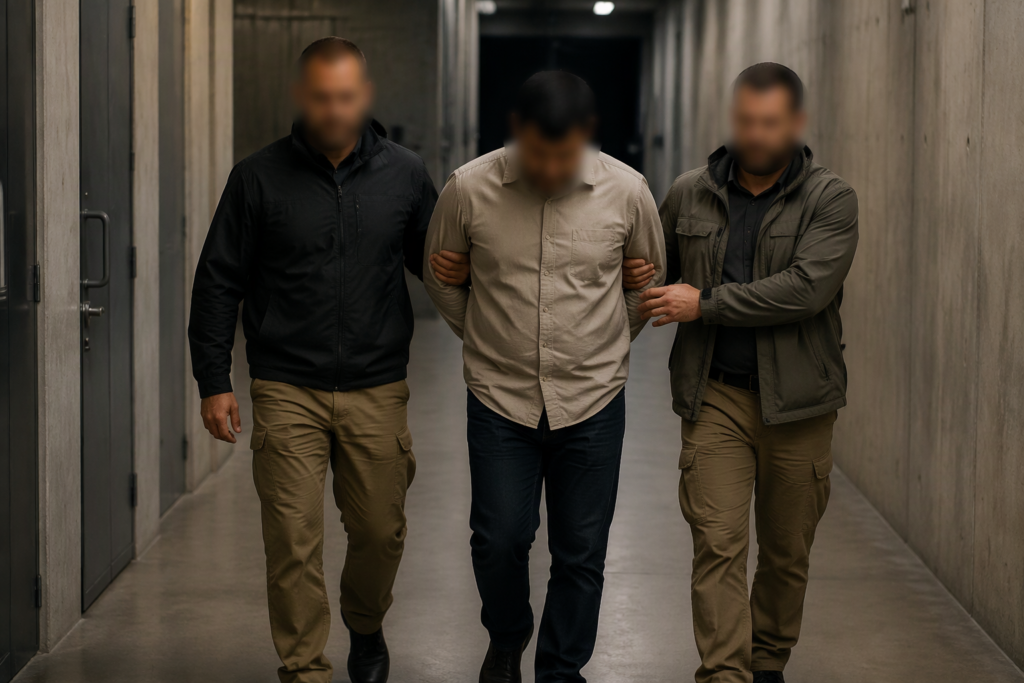
Gunfire ripped through an agricultural city in Sinaloa on Friday as elite troops closed in on one of the most hunted fugitives in North America. By the time the smoke cleared, 11 people were dead and Fausto Isidro Meza Flores, the notorious cartel boss known as El Chapo Isidro, was in military handcuffs.
The operation killed a man wanted in the US for multiple murders, ending a manhunt that spanned years and survived two previous attempts to apprehend him. Four members of the Mexican security forces and seven suspected cartel gunmen were killed in the assault on a compound in Guasave, Mexican defense officials said on Saturday.
Also read: El Chapo Isidro Captured in Violent Sinaloa Raid
For residents of northwestern Mexico, the takedown removes a dominant underworld figure who has controlled local trafficking corridors for over a decade. For American law enforcement, it delivers an FBI top-ten fugitive who faces a potential death penalty or life sentence in the United States.
The deadly assault in Guasave
The raid unfolded in Guasave, an agricultural stronghold where Meza Flores, 44, ran his operations. Mexican special forces planned the strike as a stealth mission, but it quickly became an open street battle.
Gun battles resonated across the city and left streets smoldering from gun and building fires. The noise forced the suspension of a professional baseball game being played in Guasave.
The cartel used mounted, armored pick-up trucks in an attempt to slow the advancing troops, prompting two of the Mexican Black Hawk helicopters to fly in and provide gun support for the ground troops.
How surveillance trapped El Chapo Isidro
The assault followed weeks of coordinated work between Mexico’s National Army, the Special Forces of the National Guard, and United States intelligence agencies. Mexican authorities supplied initial target locations to US intelligence teams weeks ahead of the strike.
American officials then flew reconnaissance drones directly over the Guasave compound. Mexican military analysts studied the live video feeds and mapped the cartel chief’s daily movements.
Investigators intercepted his communications, including text messages with his mother, wife, and sister to determine his travel plans. Agents monitored phone and radio communications with the Guasave compound on Friday and verified the cartel chief’s identity, as well as his physical description and manner of walking.
Diversions, decoys and a military transport
commanders staged diversionary raids in another city in Sinaloa, Los Mochis, to prevent Cartel reinforcements from arriving to the Guasave compound. These raids also allowed security forces to engage members of the Cartel and occupy them in shootouts, thus preventing them from defending the Guasave compound.
With local defenses fractured, more than two dozen undercover soldiers from the military’s Joint Special Force unit stormed the compound. A perimeter of dozens more troops held the outer lines.
Once troops had Meza Flores subdued, the force needed a way to pull him out of hostile territory alive. Commanders launched a second deception: two helicopters hovered over the compound and flew straight toward Los Mochis, leading observers to assume the prisoner was aboard. In reality, soldiers bundled Meza Flores into an armoured ground vehicle and sped away through Guasave’s streets before transferring him to a military plane that touched down in Mexico City early Saturday morning.
Dismantling the Los Mazatlecos network
The raid went beyond Meza Flores. The military arrested eight members of the cartel, including two of his closest associates.
Meza Flores’ cousin was arrested and identified as the cartel’s No. 2 leader. The military also arrested Meza Flores’ brother-in-law, who they say is the group’s chief financial operator.
Meza Flores spent years heading Los Mazatlecos, an armed syndicate that originated as an enforcement wing of the Beltran Leyva Cartel. After that cartel fractured, the group broke away in 2013 to run independent drug operations from Guasave, surviving frequent clashes with rival factions across Sinaloa.
Federal prosecutors in the United States, who posted a $5 million reward for his capture, are expected to seek his formal extradition next. Mexican judicial authorities will hold an initial detention hearing in Mexico City to review the charges against him and determine the timeline for any transfer abroad.
Source: Al Jazeera


