
Minnesota Official’s Voter Guide Message on Somali TV Triggers Viral Backlash
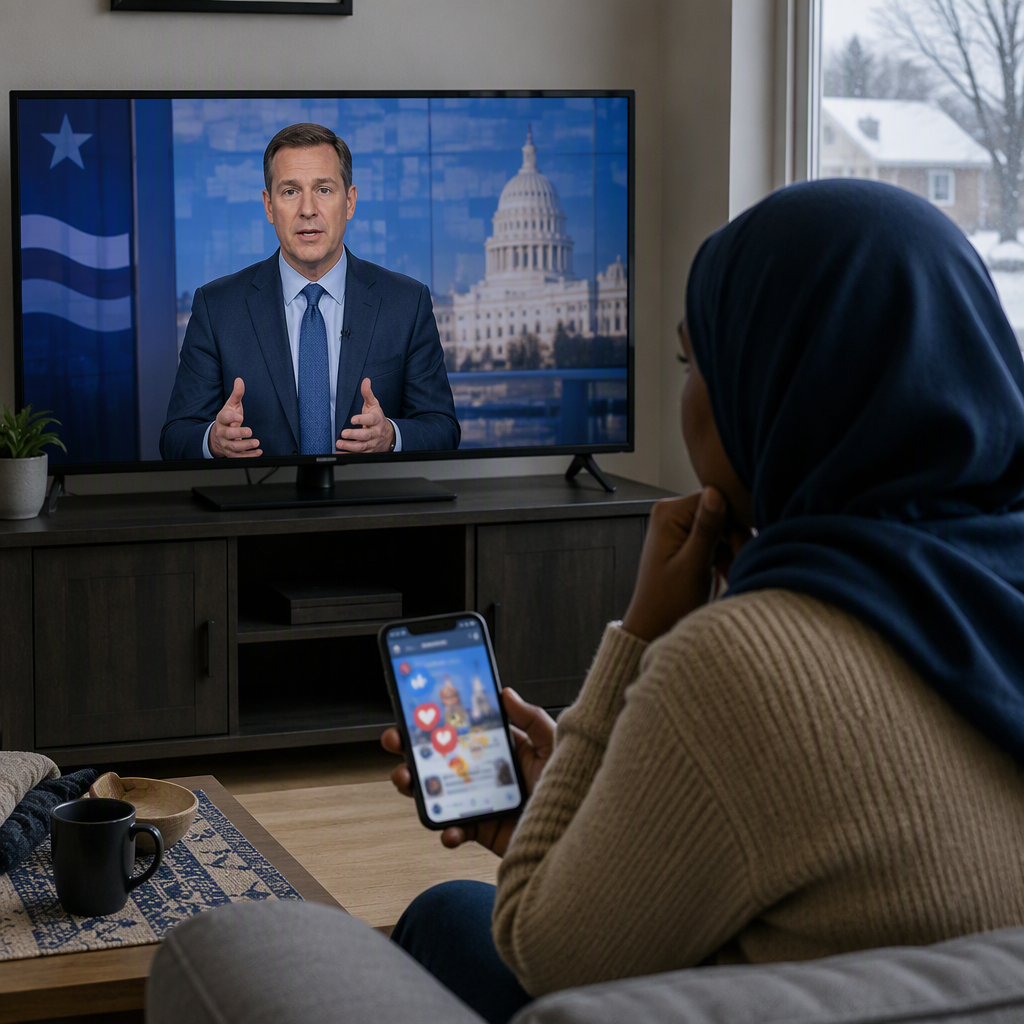
A recent broadcast featuring a Minnesota official’s voter guide message on Somali-language television has sparked widespread debate and intense online criticism, with political opponents and commentators arguing that the presentation crossed ethical boundaries.
The controversy erupted after clips of the televised segment circulated across social media platforms, drawing sharp scrutiny from critics who questioned the framing and intent of the outreach effort. Observers quickly seized on the broadcast, with several high-profile voices claiming the messaging was “not an accident” and demanding greater accountability from state election administrators.
Also read: Mamdani’s Midterm Message to Voters Stirs Debate on ID Laws and ICE
Details Behind the Minnesota Official’s Voter Guide Message
The segment aired on a local Somali-language television network that serves the Minneapolis–Saint Paul metropolitan area, which is home to the largest Somali diaspora in North America. State and municipal agencies routinely engage ethnic media outlets to inform eligible voters about registration deadlines, polling locations, and absentee ballot procedures.
However, critics allege that this particular appearance went beyond routine, nonpartisan voter education. Sceptics raised concerns over translation nuances, the specific context surrounding voting requirements, and whether the guidance adhered to nonpartisan civic communication standards.
While election offices regularly translate voting materials into multiple languages—including Hmong, Spanish, and Somali—critics argue that broadcast appearances require stricter oversight to ensure neutrality and compliance with state election laws.
Critics Claim Broadcast Was ‘Not an Accident’
Online pushback gained rapid momentum over the weekend, amplified by conservative commentators and political action groups who accused administrators of tailoring targeted election guidance without equal transparency for the broader public.
Opponents seized on the phrase “not an accident” to suggest that the presentation was a calculated strategy rather than an administrative oversight. Critics highlighted potential vulnerabilities in voter education efforts, asserting that specialized broadcasts should always provide clear, verifiable transcripts in English to prevent misinformation.
Several local grassroots organizations also called on state oversight panels to review state-funded media buys and outreach contracts to verify that public funds were utilized strictly for nonpartisan voter engagement.
Officials Defend Multilingual Civic Outreach
In response to the mounting criticism, defenders of the program pointed out that multilingual voter education is standard practice under federal and state voting rights protections. Election officials frequently emphasize that outreach programs are designed to break down language barriers and increase civic participation among naturalized citizens.
Advocates for immigrant communities noted that voter education initiatives must reach diverse residents through trusted community channels. Spokespersons for civic engagement groups emphasized that eligible new American voters often rely on community-specific broadcasts for essential practical information, such as ballot completion rules and polling place accessibility.
Officials maintained that civic materials provided to foreign-language outlets are drawn directly from official election resources, rejecting assertions that the campaign was intended to favor any political party or outcome.
What Happens Next in the Voting Debate
The viral incident arrives amid heightened national scrutiny of election administration and voter outreach programs. With upcoming elections on the horizon, state lawmakers are expected to review public communication standards during legislative oversight hearings.
Policy analysts suggest the controversy could prompt calls for mandatory English subtitles or standardized archiving for all state-sponsored programming across foreign-language media channels.
As discussions continue, the controversy surrounding the Minnesota official’s voter guide message underscores the delicate balance election administrators face when navigating civic outreach, community translation, and public transparency.