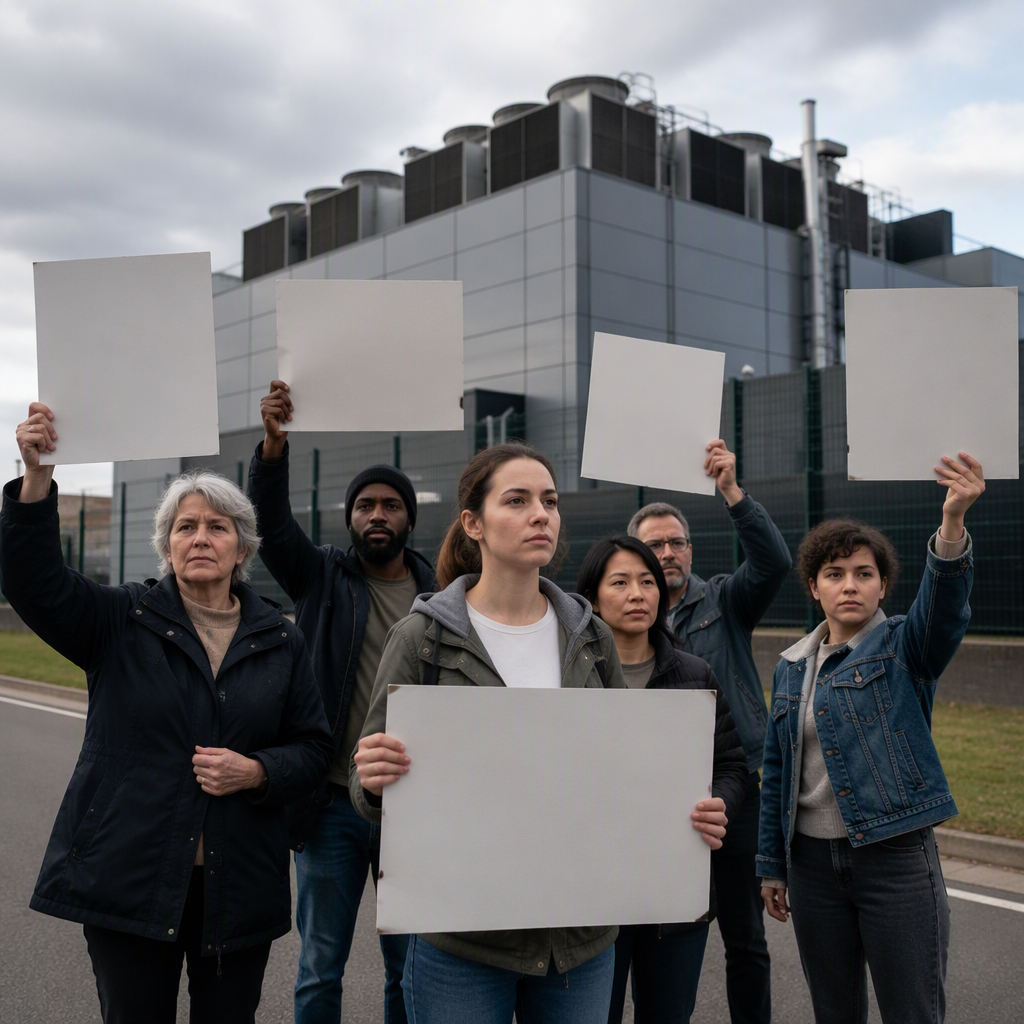

Voter Opposition to AI Data Centers Grows as Public Backlash Intensifies
Across the United States and abroad, voter opposition to AI data centers is accelerating rapidly as communities confront the steep resource demands of the ongoing artificial intelligence boom. Once welcomed quietly by municipal leaders for prospective tax revenue, proposals for massive computing facilities are now triggering fierce pushback at town halls, zoning board hearings, and local ballot boxes.
The backlash spans rural towns and suburban corridors alike. Residents increasingly cite soaring utility rates, potential power grid instability, massive water consumption, and industrial noise as primary reasons to reject new projects. As tech conglomerates pour billions into building out infrastructure to power generative AI, community resistance is reshaping local politics and forcing lawmakers to reconsider unchecked expansion.
Also read: Minnesota Official’s Voter Guide Message on Somali TV Triggers Viral Backlash
Drivers Behind the Rising Opposition to AI Data Centers
The core grievance among local voters centers on resource competition. Modern hyperscale data centers require immense amounts of electricity and cooling water to maintain tens of thousands of power-dense graphic processing units (GPUs).
Grid operators across North America have repeatedly warned that electricity demand from data centers could outpace generation capacity in several regional markets. In response, utility companies have sought rate increases and deferred the retirement of fossil-fuel plants to meet peak demand. Homeowners and small businesses often find themselves absorbing the cost of infrastructure upgrades needed to support tech facilities.
Key concerns fueling voter dissatisfaction include:
- Surging Energy Demands: Expanding computing clusters consume equivalent power to mid-sized cities, raising fears of localized brownouts and higher residential electric bills.
- Heavy Water Consumption: Evaporative cooling systems in data centers pull millions of gallons of potable water daily, creating friction in drought-prone regions.
- Zoning and Quality of Life: Massive warehouse-style compounds often sit adjacent to residential neighborhoods, generating continuous acoustic hums from cooling towers and backup diesel generators.
- Limited Permanent Jobs: While data centers generate short-term construction employment, operational facilities typically employ only a few dozen permanent staff members.
Local Elections and Zoning Battles Turn Contentious
What began as grassroots activism has rapidly translated into electoral pressure. In established data center hubs such as Northern Virginia—often called “Data Center Alley”—local candidates have won municipal seats by running explicitly on anti-expansion platforms.
County supervisors who previously approved large-scale rezonings now face contested primaries and voter recall efforts. Similar tensions have flared across Georgia, Indiana, Arizona, and Oregon, where planning commissions are routinely greeted by hundreds of protesting residents demanding moratoriums on further construction.
In several jurisdictions, community groups have filed lawsuits challenging environmental reviews and tax incentive packages granted to tech companies. Critics argue that multi-million-dollar tax abatements deprive public services of revenue while leaving municipal grids strained.
State and Federal Lawmakers Step In
As voter opposition to AI data centers commands greater attention, state legislatures are responding with tighter oversight. Lawmakers in multiple states have introduced legislation aimed at capping tax exemptions or requiring technology developers to independently finance their power generation.
Several proposed measures would require data center operators to secure dedicated renewable energy sources, such as on-site solar or advanced battery storage, before connecting to the public grid. Others mandate strict transparency regarding water withdrawal and acoustic emissions near residential areas.
At the federal level, regulators and energy authorities are examining the collective impact of AI compute loads on national grid reliability, noting that uncoordinated expansion could jeopardize broader decarbonization goals.
What Happens Next
The intensifying conflict between digital infrastructure demand and community resources is entering a critical phase. Over the coming election cycles, data center zoning and public utility oversight are expected to remain prominent issues in local races.
Technology companies are already adjusting their strategies by seeking alternative cooling methods, investing in nuclear energy agreements, and exploring less populated regions with excess grid capacity. However, as new proposals emerge, developers will likely face heightened public scrutiny and stricter permitting standards from empowered local officials.
Conclusion
The expanding voter opposition to AI data centers demonstrates that the physical footprint of artificial intelligence can no longer bypass public scrutiny. As local populations demand protection for their power grids, water tables, and property values, tech leaders and policymakers must navigate a more contentious landscape where community consent is no longer guaranteed.