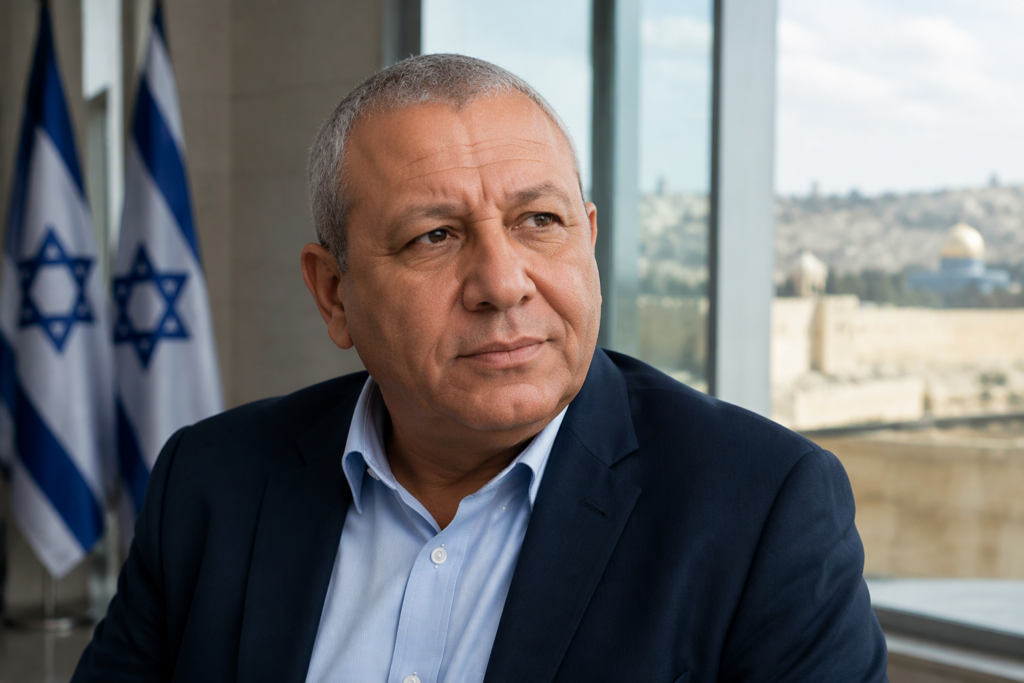

As debates over the future direction of Israeli leadership intensify, Gadi Eisenkot has increasingly drawn attention as a prominent counterweight to Prime Minister Benjamin Netanyahu. Widely viewed as an understated and unpolished political figure, Eisenkot presents an image sharply distinct from the long-serving premier, raising questions about whether he can project a different vision of Israel to the international community.
A Distinct Contrast to Benjamin Netanyahu
Eisenkot’s public persona stands in stark contrast to Netanyahu’s well-known style. Where Netanyahu is frequently characterized by polished rhetoric and a combative approach to political maneuvering, Eisenkot is widely regarded as reserved, plainspoken, and deliberative.
Also read: Israel’s President Taps Eisenkot to Form Next Government Over Netanyahu
This understated demeanor has positioned him among observers and voters as an alternative archetype for national leadership. Rather than relying on high-profile public relations, his appeal rests on a reputation for steady, no-nonsense engagement within the country’s political and security landscape.
Gadi Eisenkot and the Question of Real Policy Shift
Despite his status as an “anti-Netanyahu” figure, political analysts note that a change in leadership style does not necessarily guarantee a departure in core policy. While Eisenkot offers a marked stylistic departure from Netanyahu, significant debate remains over whether his governance would mark a genuine break from the status quo.
Critics and commentators point out that political leaders emerging from traditional security backgrounds often share foundational assumptions on national defense and regional diplomacy. As a result, questions persist over whether an administration shaped by Eisenkot would chart a transformative course or ultimately continue the strategic legacy established under Netanyahu’s tenure.
Balancing Domestic Realities and International Expectations
For international partners and domestic audiences seeking alternative leadership, Eisenkot represents a potential shift in tone and diplomatic engagement. His less confrontational public posture could offer a more pragmatic interface with foreign governments.
However, navigating the complex realities of the political landscape means balancing the desire for reform with entrenched strategic interests. Whether Eisenkot can deliver meaningful change or will find himself bound by the enduring framework of his predecessor remains one of the central questions surrounding his political future.
Source: Al Jazeera