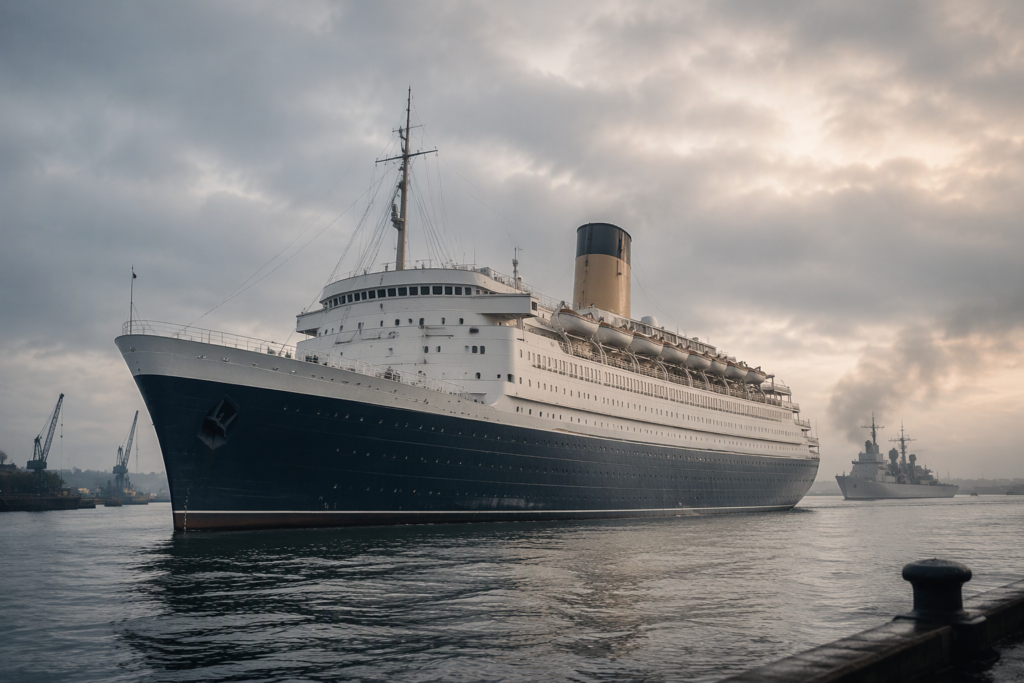

Behind the polished decks and upscale accommodations of mid-century ocean travel, a Cold War luxury liner was engineered with a discreet national defense mission, according to an analysis shared by a maritime expert. While passengers enjoyed transatlantic voyages in comfort, the vessel’s underlying architecture was carefully planned to meet emergency military requirements.
Hidden Defense Objectives of a Cold War Luxury Liner
During the heightened tensions of the mid-20th century, Western governments frequently coordinated with commercial shipbuilders to ensure strategic maritime preparedness. A maritime expert pointed out that passenger vessels constructed during this period often served dual purposes, disguising rapid military mobilization capabilities beneath layers of commercial elegance.
Also read: Medal of Honor Hero Exposes Dire Military Barracks Conditions Facing Troops
Governments often provided funding and design specifications to ensure these vessels could be requisitioned at short notice. In the event of armed conflict with adversary nations, civilian operators would quickly hand over the ships for conversion into high-capacity troop transports or logistical support assets.
Dual-Purpose Engineering and Strategic Speed
To qualify as strategic assets, luxury liners from the era incorporated advanced naval architecture rarely visible to paying guests. These features typically included reinforced hull structures, specialized water-tight bulkheads, and propulsion systems capable of achieving extraordinary speeds.
Superior velocity served a critical defense purpose: outrunning hostile submarines and crossing vast ocean stretches without requiring continuous naval escorts. The expansive public rooms and multi-tier dining halls were designed for rapid reconfiguration, allowing crews to install thousands of bunks, medical facilities, and command equipment within days.
A Lasting Legacy of Cold War Preparedness
As aviation rapidly supplanted transatlantic ocean liners in the latter half of the 20th century, the defense rationale for large passenger vessels gradually diminished. However, the dual civilian and defense mandate behind these grand ships remains a remarkable chapter in naval history.
The expert’s observations highlight how geopolitical rivalry extended into commercial industries during the Cold War. Even settings built for leisure and international diplomacy often formed an integral part of national defense readiness.
Source: Fox News