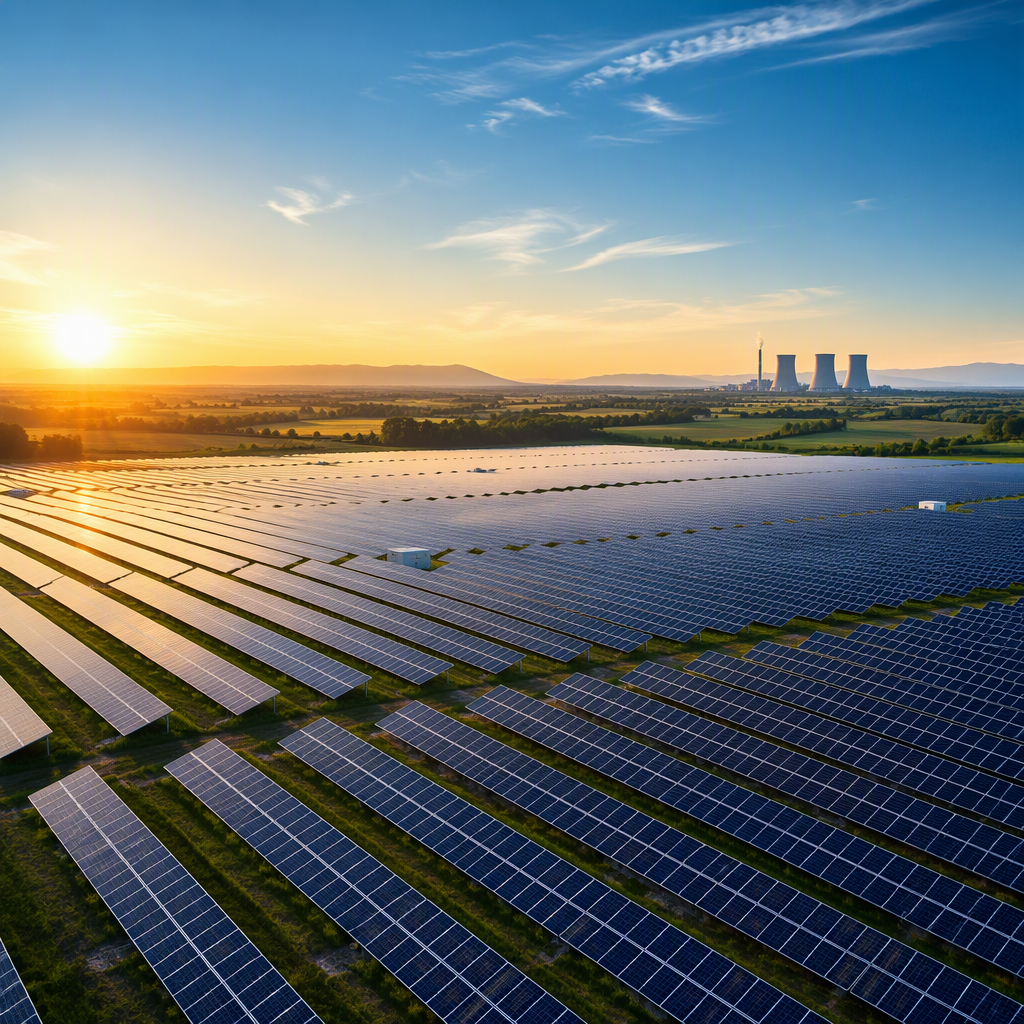

‘Offensively Cheap’: How Solar Power Is Quietly Becoming Bigger Than Nuclear
Plummeting manufacturing costs and rapid deployment have turned solar power into one of the most disruptive forces in modern energy history. Once dismissed as an expensive alternative energy experiment, photovoltaic technology has become so inexpensive that industry analysts frequently describe current module prices as “offensively cheap.” As a result, global solar installations are rapidly expanding, overtaking nuclear energy in total installed capacity and quickly closing the gap in annual electricity generation.
Data from energy research groups, including the International Energy Agency (IEA) and BloombergNEF, show that global investment in solar power now surpasses spending on all other electricity generation sources combined. Driven by economies of scale and aggressive manufacturing expansion—primarily in China—solar photovoltaic modules have seen prices plunge below 10 to 12 cents per watt, a threshold unthinkable just a decade ago.
Also read: Solar Power vs Nuclear: How Cheap Solar Is Eclipsing Atomic Energy
Plummeting Module Costs Drive Unprecedented Growth
The core catalyst behind the modern renewable boom is simple economics. Over the past decade, the levelized cost of energy (LCOE) for utility-scale solar has dropped by nearly 90 percent. Silicon supply gluts, improved manufacturing efficiency, and fierce competition among panel makers have driven hardware costs down to historic lows.
This deflationary trend stands in stark contrast to the economics of conventional thermal and nuclear power plants. Nuclear projects are notorious for extensive capital requirements, strict regulatory hurdles, and chronic construction delays that routinely push completion timelines beyond a decade. While a modern nuclear reactor can cost upwards of $10 billion to $15 billion and take years to permit and build, utility-scale solar farms can be commissioned in months at a fraction of the initial cost.
Installed Capacity: How Solar Outpaced Nuclear
In terms of raw nameplate capacity, solar power surpassed nuclear energy several years ago. Today, the world has well over 1,500 gigawatts (GW) of installed solar photovoltaic capacity, compared to approximately 375 to 400 GW of operational nuclear capacity globally.
Annual additions underscore this divergence. In recent years, the world has installed between 400 GW and 500 GW of new solar panels annually. By comparison, global net nuclear capacity additions typically hover in the single digits or low tens of gigawatts per year as older reactors retire and new builds face delays.
While nuclear facilities run at exceptionally high capacity factors—often exceeding 90 percent—solar panels typically operate at 15 to 25 percent capacity factors due to day-night cycles and weather patterns. However, the sheer volume of new solar installations is now overwhelming that capacity factor advantage. Analysts project that within the next few years, total annual electricity generated by solar will match and eventually surpass nuclear output on a global scale.
Generation, Storage, and Grid Stability Challenges
Despite its cost advantage, solar power faces persistent challenges related to intermittency. Nuclear advocates correctly point out that nuclear power plants provide reliable, dispatchable, 24/7 baseload power without emitting greenhouse gases during operation. Nuclear remains a vital pillar for industrial power grids, especially during winter peaks and low-sunlight periods.
To overcome the intermittency bottleneck, developers are increasingly pairing solar farms with battery energy storage systems (BESS). Much like solar panels, utility-scale lithium-ion battery costs have declined sharply over the past decade. Grid operators are also exploring pumped hydro storage, regional grid interconnectors, and advanced demand-response systems to manage midday solar surpluses and evening demand ramps.
What Happens Next
The global transition will not be an outright winner-take-all scenario. Many governments, including the United States, France, and China, continue to support nuclear power through life-extension programs for existing fleets and investments in small modular reactors (SMRs) to guarantee grid resilience.
Nevertheless, the market momentum remains overwhelmingly on the side of solar power. As module prices stay rock-bottom and deployment speeds accelerate, solar power will continue to absorb the lion’s share of new electricity demand globally, firmly cementing its position as the bedrock of future energy expansion.