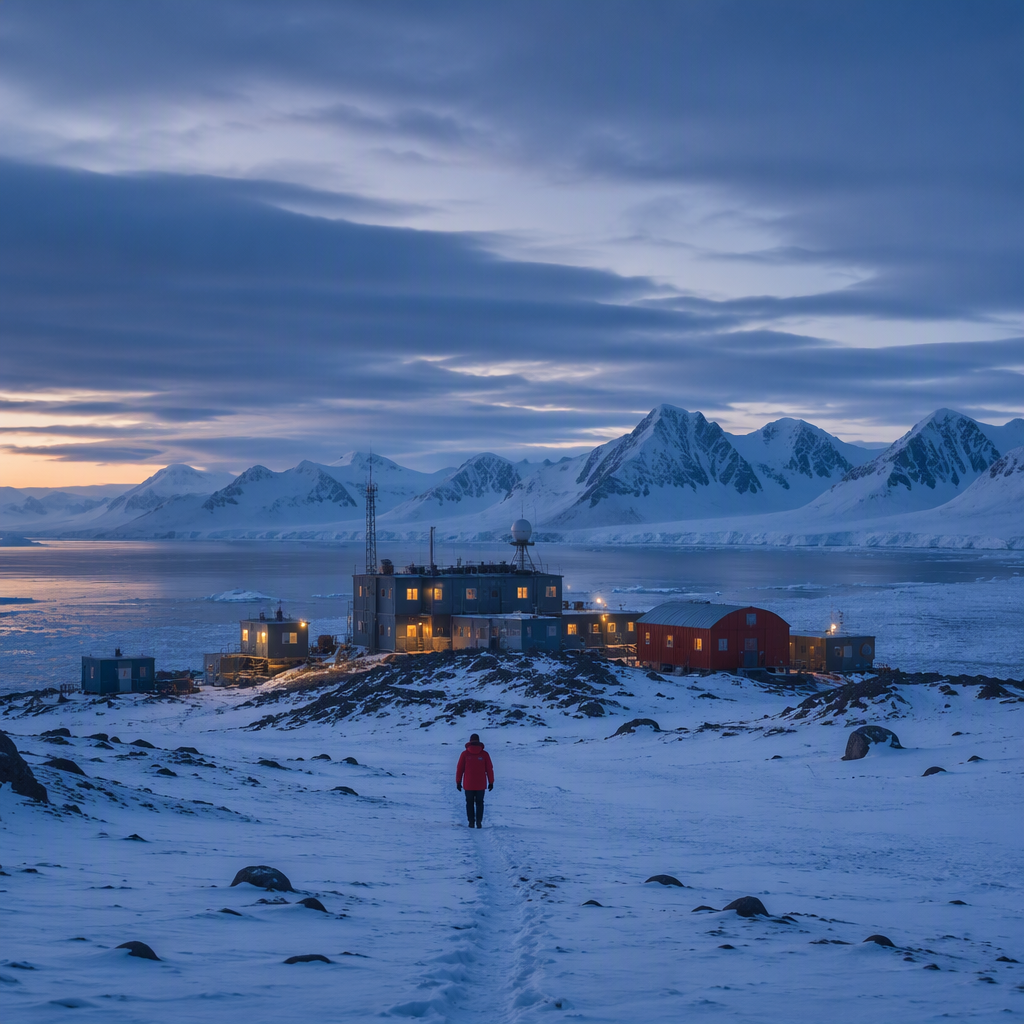

Life in a Remote Station: Surviving Extreme Isolation at the Edge of the World
For the small crews stationed in Earth’s most inhospitable corners, life in a remote station is defined by quiet endurance, technical precision, and total dependence on fragile supply chains. From the frozen plains of Antarctica to isolated weather outposts in the high Arctic, these scientific communities operate months at a time completely cut off from civilization, conducting vital research on climate change, space simulation, and atmospheric physics.
While the romantic notion of living at the edge of the world captures public imagination, the day-to-day realities demand relentless operational discipline. Personnel—consisting of research scientists, mechanics, medical officers, and cooks—must adapt to sub-zero temperatures, prolonged darkness during polar winters, and complete psychological isolation.
Also read: UK to Invest £100m in World-First AI Biosecurity Lab
The Reality of Daily Life in a Remote Station
Routine serves as the primary defense against psychological fatigue in remote polar stations like Antarctica’s Concordia or the Amundsen-Scott South Pole Station. Days follow strict schedules designed to maintain normalcy in environments where the sun may not rise for months.
Mornings begin early with equipment checks, status meetings, and infrastructure maintenance. Inside the habitats, temperature and atmospheric controls are monitored continuously; a heating failure or power outage in external temperatures that routinely drop below minus 60 degrees Celsius poses an immediate threat to survival.
Support staff are the backbone of station life. Diesel mechanics keep generators running 24 hours a day, while station cooks must prepare balanced meals using frozen, dried, and long-life stores when fresh produce runs out weeks after the last supply flight departs.
Extreme Isolation and the Science of Survival
The intense isolation experienced by winter-over crews provides unique opportunities for scientific research beyond meteorology and glaciology. Space agencies, including the European Space Agency (ESA) and NASA, frequently study life in a remote station to model human behavior during long-duration space missions, such as prospective journeys to Mars.
Research teams monitor changes in sleep cycles, immune system function, and cognitive resilience. The phenomenon known as “winter-over syndrome”—characterized by lethargy, irritability, and altered circadian rhythms caused by the lack of natural sunlight—is carefully tracked and managed through light therapy, structured physical exercise, and mental health protocols.
Logistical Hurdles and Communication
Modern satellite constellations have significantly altered the experience of station life by providing more reliable internet connectivity. However, bandwidth remains tightly rationed to prioritize research data uploads over personal communications. Crews remain acutely aware that medical emergencies cannot easily be resolved through evacuation during winter periods, when extreme storms and freezing runways ground all aircraft.
Global Scientific Discoveries from the Edges of the Earth
Despite immense environmental and logistical challenges, these outposts produce data fundamental to global science. Deep ice-core drilling provides atmospheric records dating back hundreds of thousands of years, tracking historical carbon dioxide levels and planetary temperature swings.
Simultaneously, the clean air and dry atmosphere of high-altitude polar plateaus allow deep-space telescopes to map cosmic microwave background radiation with minimal interference. Without continuous human presence to calibrate instruments and manage data relays, these observations would be impossible.
What Happens Next
As international scientific programs prepare for upcoming research seasons, polar operators are upgrading station infrastructure to withstand increasingly erratic weather patterns and reduce reliance on fossil fuels. Hybrid microgrids utilizing specialized wind turbines and high-capacity battery storage are being deployed across several Arctic and Antarctic installations.
Ultimately, life in a remote station continues to test the boundary between human technology and the natural world, proving that scientific collaboration can thrive even in the most unforgiving environments on the planet.